



Before the Thanksgiving break, we wanted to share a touching story from one of our reporters who took a closer look at how friends and families remember veterans from Vietnam.
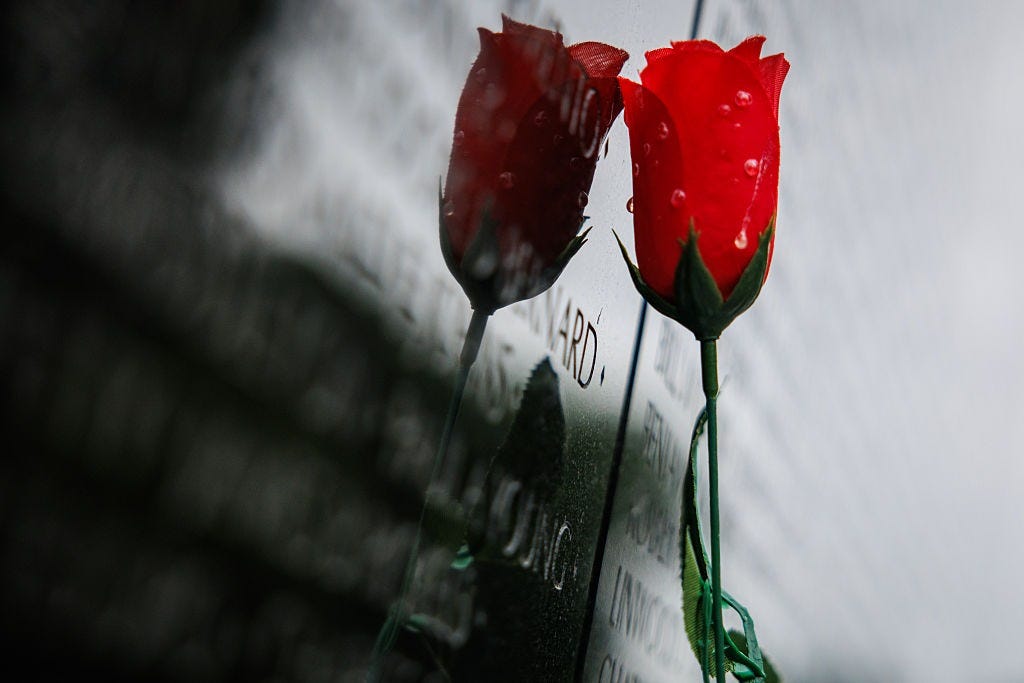
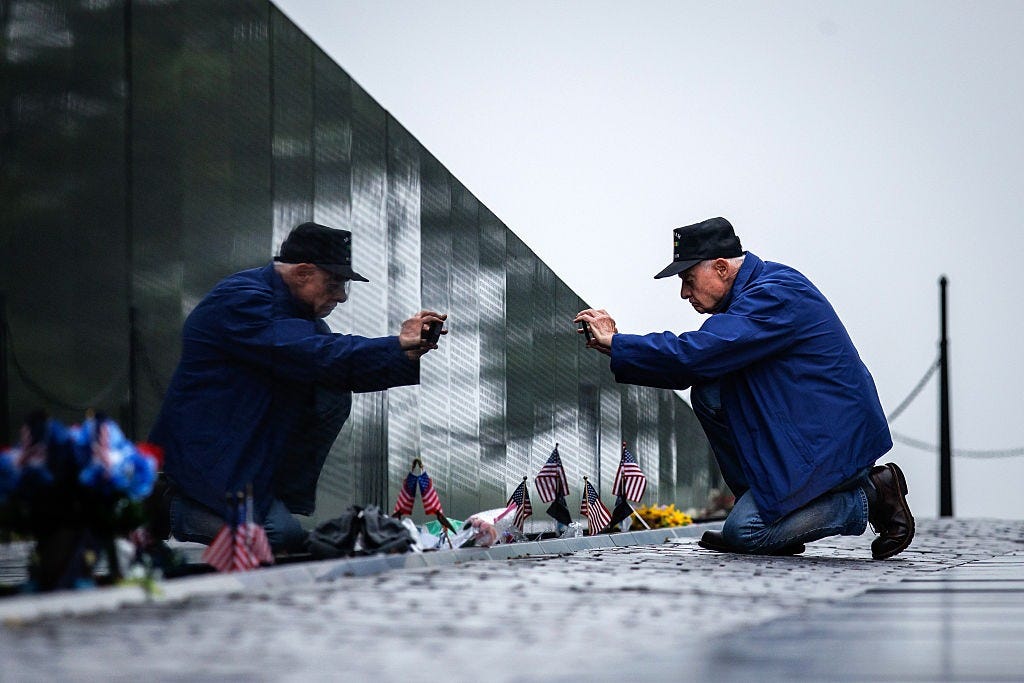
Every night at the Vietnam Veterans Memorial in Washington, D.C., park rangers do something most visitors never see. They walk the length of the wall and pick up what people have left behind: letters, POW bracelets, photographs and even a motorcycle.
Many of these objects end up in a secure National Park Service warehouse in suburban Maryland, where they’re cataloged and preserved.
More than 400,000 items have been left at the memorial since it was dedicated in 1982, each potentially holding a story about the more than 58,000 American service members whose names are etched into its black granite.
Today, Lyndsay Keith speaks with Jay Korff of ABC7 Washington, who spent nearly a year researching and producing a documentary called Left Behind, about the extraordinary collection and the families whose stories are preserved there.
Inside the Warehouse Where America’s Vietnam Memories Are Kept
Ten years ago, Jay Korff and his photographer-editor set out to explore something few Americans knew existed: a massive collection of objects left at the Vietnam Veterans Memorial.
The warehouse is located in a nondescript industrial park in suburban Maryland. There are no public tours, and gaining access required months of preparation and background checks.
Jay describes walking inside as being like the final scene of Raiders of the Lost Ark. Thousands of boxes stretch from floor to ceiling, carefully stored in a climate-controlled environment by National Park Service curators.
Inside are dog tags, combat boots, photographs and personal letters. There are also items that seem almost impossible to imagine anyone carrying to the memorial.
One of them is the Wisconsin Hero Bike, a custom motorcycle built by veterans to honor Wisconsin service members who were still missing from the Vietnam War.
The veterans brought the motorcycle to Washington as part of Rolling Thunder, but they didn’t ride it. Instead, they delivered it on a trailer and left it at the wall, pledging that nobody would ride it until the missing men were accounted for.
And then there are the recordings.
Jay tells the story of a young soldier who recorded messages while serving in Vietnam, speaking to his family and the woman he hoped to marry when he returned home. The tapes eventually made their way to the memorial, where they sat among hundreds of thousands of other objects.
A curator had just digitized the recordings when Jay’s team visited the warehouse.
The recordings were deeply personal, offering a chance to hear the voice of someone who had been gone for decades. Jay and his team spent weeks tracking down the soldier’s family and obtaining permission to share them in the documentary.
Another remarkable object was a helicopter rotor blade recovered from Vietnam. The helicopter had been shot down during the war, killing several servicemen.
Decades later, the sister of one of those men traveled to Vietnam as part of an effort to recover remains. Investigators learned that a local farmer had been using a rotor blade as part of a fence. Its identifying numbers connected it to the helicopter in which her brother died.
The blade eventually made its way to the memorial and into the collection.
Should These Objects Be in a Museum?
Jay says the warehouse contains an extraordinary record of the Vietnam War, but the collection isn’t open to the public.
Some artifacts have appeared in museums and temporary exhibitions, and the Vietnam Veterans Memorial Fund has explored creating a dedicated education center. But funding has remained a challenge.
The National Park Service has also refined its collection policies over the years, focusing preservation efforts on objects with meaningful connections to Vietnam veterans and the war rather than keeping every offering.
For Jay, the importance of the collection goes beyond preserving history. These objects reveal how families, friends and an entire country have dealt with loss, remembrance and grief.
And as the generation that fought in Vietnam continues to age, the stories contained in that warehouse become increasingly valuable.
Watch Jay Korff’s documentary, Left Behind: Offerings to the Vietnam Veterans Memorial Wall, to see the collection and hear the stories behind these remarkable artifacts.
What do you think should happen with these artifacts? Do they belong in a museum, or should they go back to their families?
Let us know in the comments.
From all of us at The National Press, have a happy Thanksgiving.
The National Press
Real reporting. From real America.


