


When American airspace went into a nationwide ground stop last week, federal investigators eventually pointed to a router installed in a small facility in Arkansas. A reporting team went there to see how one small building could cause so much chaos.
Plus, our investigative team looks into the foster care system, which is responsible for approximately 400,000 children across America.
Today, Lyndsay Keith speaks with Mikenzie Frost of FOX45 Baltimore and Andrew Mobley of KATV in Little Rock about what their investigations uncovered.
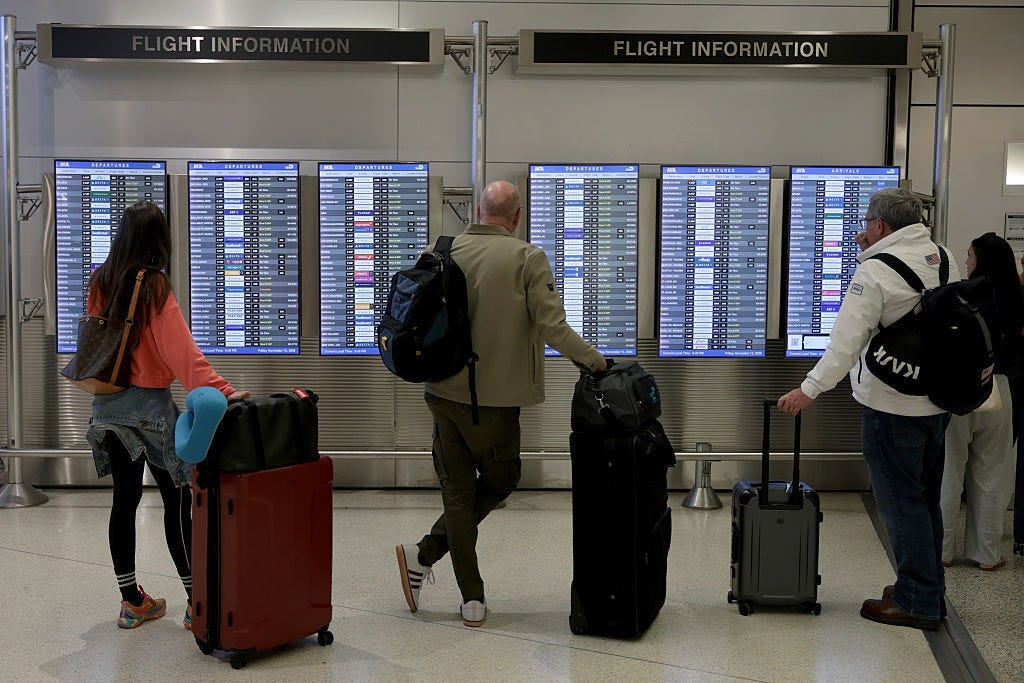
How Did a Small Arkansas Airport Bring U.S. Flights to a Halt?
Last Friday afternoon, departing flights across America stopped. It wasn’t the weather, and the FAA initially said it wasn’t a cyberattack.
Federal officials traced the disruption to an equipment upgrade at a small airport in El Dorado, Arkansas, a town of roughly 16,000 people.
Andrew Mobley of KATV went to see the FAA radio site. He says it looks like a shed surrounded by a chain-link fence and radio equipment, hardly the kind of place you’d expect to bring air travel to a standstill.
Crews were replacing old copper communications infrastructure with fiber-optic technology when a new router began sending more than 1,000 connection attempts every four or five seconds.
The traffic overwhelmed older equipment and affected 17 of the nation’s 22 regional air traffic control centers, prompting a nationwide ground stop.
But Andrew uncovered another important question: How much oversight did the FAA have over the work?
Internal FAA documents obtained by KATV suggest the agency changed its procedures for certain telecommunications upgrades, reducing the advance review previously required of contractors.
The router’s manufacturer says the equipment operated as configured. Investigators are still working to determine exactly what went wrong.
Andrew says the outage raises serious questions about the resilience of America’s aging aviation infrastructure and whether the procedures meant to prevent these failures are sufficient.
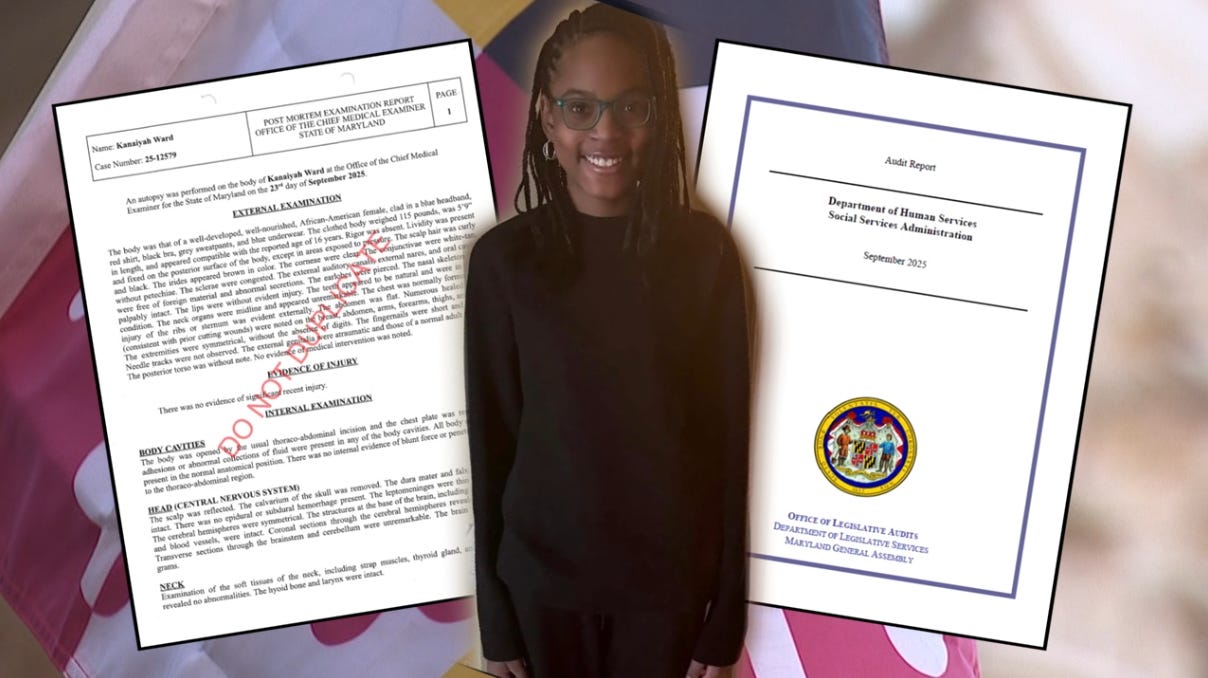
A 16-Year-Old Died While Living in a Hotel Under Maryland Foster Care
Right now in America, approximately 400,000 children are in the foster care system, and it’s up to each individual state to keep those children safe. Most are placed with families or in group homes, but when no placement is available, some children are sent somewhere far less equipped to protect them.
In Maryland, that failure cost one teenager her life.
Kanaiyah Ward was 16 when she died by suicide while living in a Baltimore hotel under the supervision of Maryland’s foster care system. Her mother had asked the state for help because of her daughter’s documented mental health struggles.
Mikenzie Frost of FOX45 Baltimore has been following the story from the beginning. She says Kanaiyah had been living in the hotel for weeks while awaiting another placement, with a contractor assigned to watch her around the clock.
The state’s investigation found negligence by the contractor. The worker assigned to Kanaiyah had been on duty for more than 50 hours after another employee called out sick. She checked on Kanaiyah early in the morning but didn’t return for approximately five hours. When she came back, the teenager was dead.
Now Kanaiyah’s mother has filed a federal lawsuit against Governor Wes Moore and other state officials, alleging they failed to protect her daughter.
Mikenzie’s investigation also uncovered children being placed in homeless shelters and government offices, along with serious oversight problems involving contractors and group homes.
After Kanaiyah’s death, Maryland banned unlicensed foster care placements, and lawmakers passed Kanaiyah’s Law to strengthen those protections. But Mikenzie says the larger problem involves staffing shortages, a lack of appropriate placements and inadequate oversight.
And this isn’t just Maryland. A federal audit discussed in the interview found that 37 states reported using emergency temporary placements.
Mikenzie believes Maryland’s foster children are safer today, but there’s still a lot of work to do.
Our Questions to You
And..
The National Press
Real reporting. From real America.


