


What happens if you get a clean bill of health on medical lab work, but years later, the science changes?
Today, we’re looking into genetic testing and notifications, and why results you received years ago might not be the final word.
Plus, illegal secret biolabs are more than TV fiction.
A reporter in California shares the story of two secret laboratories, one discovered because a code enforcement officer noticed something strange sticking out of a warehouse.
Lyndsay Keith speaks with Liz Gonzalez of FOX26 Fresno and Lisa Fletcher of Spotlight on America about what happens when science and technology move faster than the systems meant to protect the public.
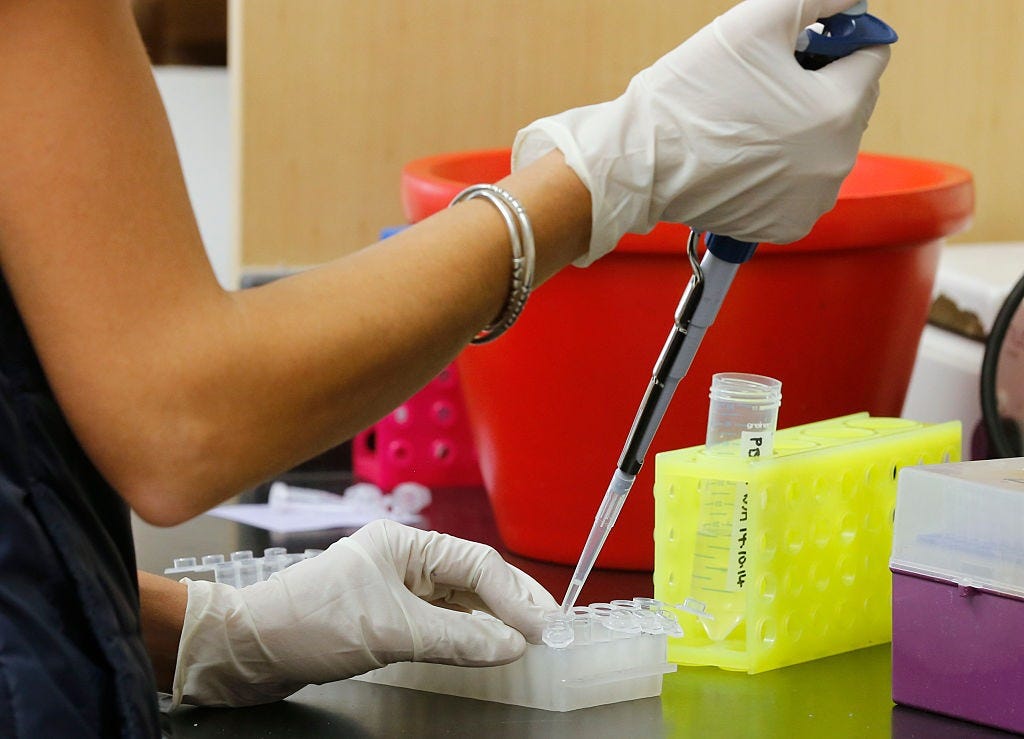
A Garden Hose Exposed a Secret Biolab in California. Then Another Was Found in Las Vegas.
In December 2022, a code enforcement officer in Reedley, California, near Fresno, noticed something odd.
A green garden hose sticking out of a downtown warehouse.
Inside, officials found nearly 1,000 laboratory mice, thousands of vials and a freezer with a note on it that read “Ebola.”
About three years later, it happened again.
On January 31, a tip from a house cleaner led police and the FBI to a garage in a quiet Las Vegas neighborhood.
Investigators say they removed more than 1,000 biological samples.
And the house was owned by the same man: Jia Bei Zhu, a Chinese national also known as David He.
Liz Gonzalez of FOX26 in Fresno has been following this story for years.
And she says it actually goes back further than the Reedley discovery.
In August 2020, Fresno firefighters responded to a building in an industrial park and found mice, vials and test kits.
The operation later moved to Reedley, where it continued until a code enforcement officer noticed that green garden hose.
That discovery exposed what Liz describes as a serious lack of oversight and coordination among local, state and federal authorities.
Here’s what investigators uncovered.
The Reedley warehouse contained laboratory mice, biological samples, test kits and vials labeled with the names of pathogens, including HIV, tuberculosis and malaria. A freezer was labeled “Ebola,” although the labels alone don’t establish what the materials contained.
The operation was presented as a warehouse handling medical tests, including COVID-19 and pregnancy tests.
In May, a federal jury convicted Zhu on 12 counts connected to selling fraudulent COVID tests and lying to the FDA. None of those convictions were for possessing the biological materials.
Investigators later found another suspected illegal biolab in Las Vegas at a property connected to Zhu. He has not been charged in connection with that discovery.
California officials recently removed the last remaining materials from the Reedley facility for destruction.
Liz says one of the biggest problems was that different agencies didn’t seem to know who was responsible for handling the laboratory.
Reedley officials reached out for help, but determining who had jurisdiction became its own challenge.
The case eventually led to congressional hearings and new local ordinances requiring laboratories to register with authorities.
But Liz says the larger question remains unanswered. Could illegal laboratories like these be operating in other communities without anyone knowing?
Officials have said the materials did not pose a demonstrated public health threat. But questions remain about what was being stored, whether everything was properly tested and how the operations were allowed to continue for so long.
And as Liz points out, the concern is bigger than one California warehouse or one Las Vegas garage.
Without consistent oversight, how would anyone even know how many similar operations exist?
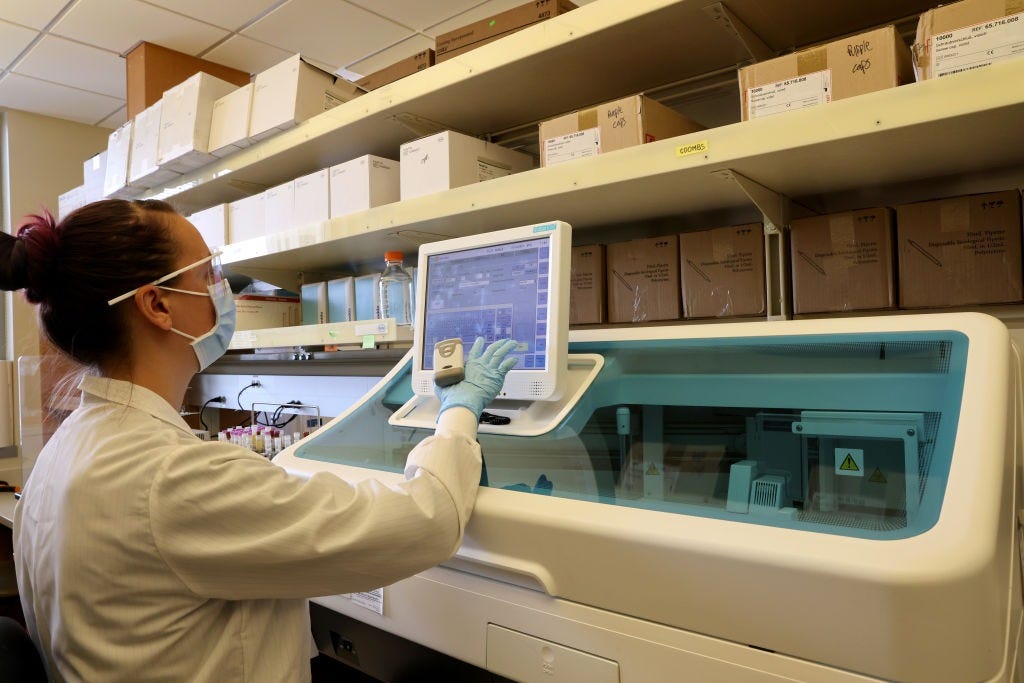
Your Genetic Test Results May Not Be the Final Word
Now to another story raising questions about what happens when science advances but the rules for communicating that information haven’t kept up.
If you’ve ever had a genetic test for cancer risk, you might have treated the result as the final word.
But it may not be.
Just ask Joelle Barrick.
Joelle had a clean mammogram and no sign of cancer. Her genetic testing had identified variants of uncertain significance, a common designation meaning scientists didn’t yet know whether those variants increased her risk.
About four years later, her phone rang. There was an updated report from her genetic testing company.
Science had moved on, and gene variants that were once labeled uncertain were now linked to a serious breast cancer risk.
Three doctors told her the same thing: She had about a 70% chance of developing breast cancer.
Their recommendation was a preventive double mastectomy.
Joelle chose to have the surgery.
And doctors found cancer in both breasts.
She’s since recovered and told Spotlight on America that without the updated information, she wouldn’t have known to take action.
Lisa Fletcher of Spotlight on America investigated Joelle’s story and a larger question affecting millions of people who have had genetic testing.
What happens when a lab learns something new about a genetic test result from years earlier?
Here’s how Lisa explains it.
But scientists’ understanding of gene variants does. A variant once considered uncertain may later be classified as harmless or associated with disease.
But some reclassifications reveal health risks that could change a patient’s medical care.
A laboratory may notify the physician who ordered the original test, and that doctor is expected to contact the patient.
Doctors retire, practices close and patients move. An updated result might never reach the person who needs it.
Lisa says people who had genetic testing years ago, particularly before 2013, should ask whether newer testing or an updated interpretation is appropriate.
In Joelle’s case, the process worked as it should.
The lab contacted her physician, and the physician contacted her.
But Lisa says there’s no guarantee that happens for every patient.
And that’s the problem.
There are millions of Americans with genetic data sitting in laboratories and medical databases across the country.
As science advances, some of those results could gain an entirely new context.
That’s the briefing for today.
What do you want genetic testing labs to do for patients who have years-old results? Do they have an obligation to tell patients when new science emerges?
And who should lead on regulating biolabs? Should the federal government step in, or is this a states issue?
Let us know in the comments.
The National Press
Real reporting. From real America.


