


Good morning.
Today: Michigan reopens sentences for young offenders, while Congress struggles to keep its pace with AI.
In Michigan, prosecutors are pulling decades-old murder cases out of storage because the rules around sentencing young offenders have changed.
Some of those cases were considered finished 30 or 40 years ago.
Meanwhile, Washington is dealing with the opposite problem: trying to write rules for artificial intelligence before the technology changes again.
Lyndsay Keith speaks with NewsChannel 3 anchor Andy Dominianni about what Michigan’s changing sentencing rules mean for prosecutors, offenders and victims’ families.
Then, Capitol Hill reporter Ahtra Elnashar explains why lawmakers in both parties are debating AI safeguards, even as the White House favors a largely voluntary approach.

Michigan Is Reopening Murder Sentences, With Some Going Back Decades
In 2012, the U.S. Supreme Court ruled that mandatory life without parole for juvenile offenders violates the Eighth Amendment.
Michigan has since taken it a step further.
The Michigan Supreme Court extended protections against mandatory life without parole to 18-year-olds and later to people who were 19 or 20 when they committed first-degree murder. These rulings apply retroactively, meaning old sentences can be sent back to the court.
The court has also begun scrutinizing extremely long sentences imposed on juveniles that may function much like life without parole. In July, it ruled that a 50-year minimum sentence imposed on James Eads, who was 16 when he committed second-degree murder, was constitutionally problematic.
That means prosecutors are reopening cases that may predate the lawyers now responsible for handling them.
In his original NewsChannel 3 reporting, Andy Dominianni found that hundreds of Michigan prisoners could be affected.
One prosecutor showed Dominianni exactly what that looks like.
“(The prosecutor) showed me a stack of 50 boxes that had dust on them from the basement dating back to the 60s and 70s, even before he was born. So the workload for his staff just doubled because, of course, they have current cases, the future cases, and now they have boxes of old cases where they need to reconnect witnesses if they’re alive and findable.”
Those prosecutors may have to reconstruct police reports, locate witnesses and find surviving relatives before deciding what position to take in court.
And the cases are not abstract legal exercises.
Dominianni covered one of them himself more than 30 years ago.
Timothy Putman was a teenager when he was charged in the 1995 death of his 12-week-old niece. He pleaded guilty to second-degree murder and received a sentence of 30 to 60 years. His case is now among those that could receive another look.
The rationale behind these changes rests partly on research into adolescent brain development.
Courts have increasingly considered the fact that judgment, impulse control, and the understanding of consequences continue developing into early adulthood. They have also emphasized that young offenders may have a greater capacity for rehabilitation.
But that runs directly into another question:
How much should the severity of the crime matter?
For victims’ families, resentencing can mean reopening a case they believed was over.
And Michigan’s debate is part of a broader national shift. More states and courts are reconsidering where to draw the line between a juvenile and an adult when imposing the harshest punishments.
Moving on to our next story:
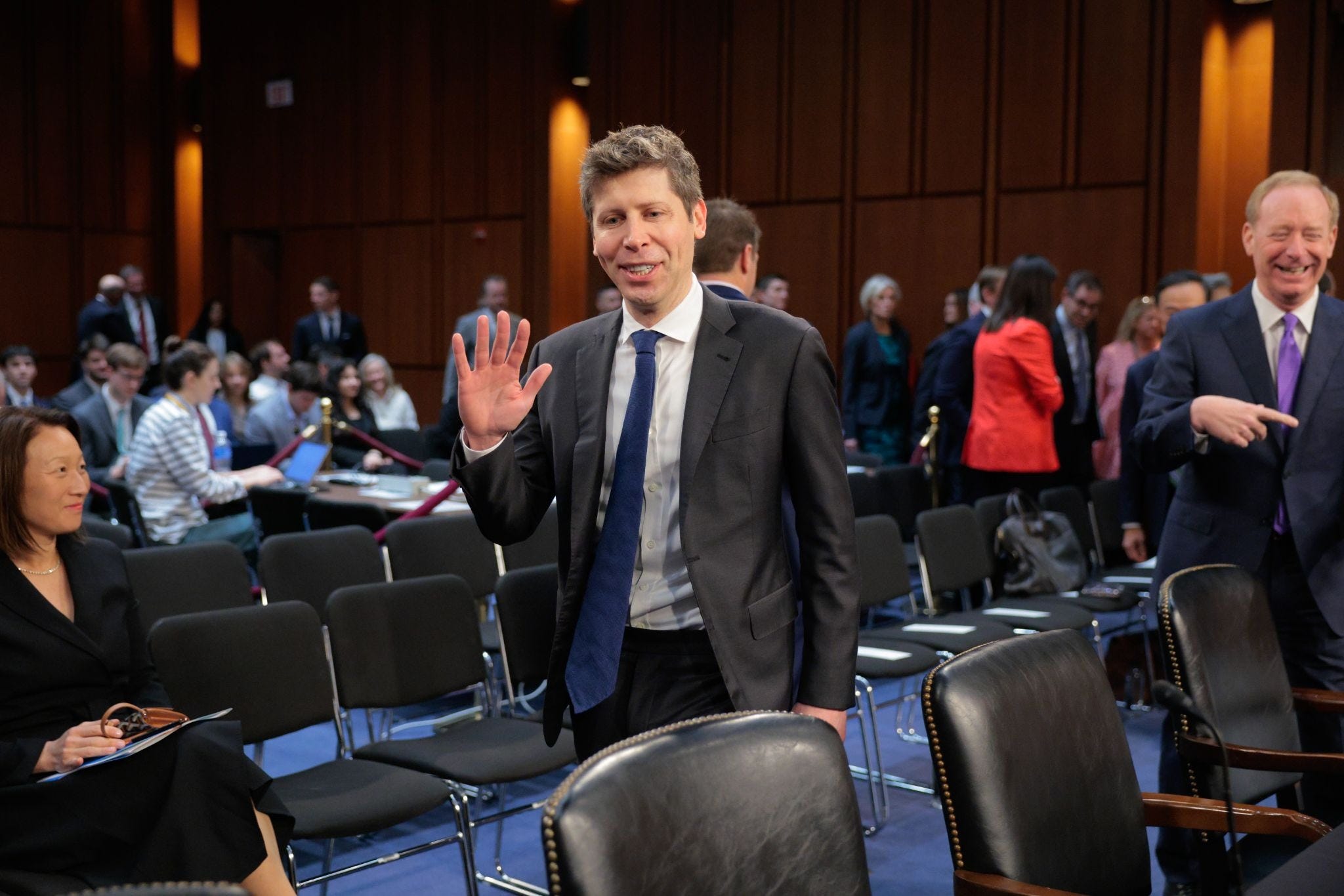
Can Congress Regulate AI Before Something Goes Wrong?
Artificial intelligence is giving Washington the opposite timing problem. The tech is changing rapidly, but Congress is not.
President Donald Trump has favored voluntary safeguards over sweeping new federal AI regulations. Earlier this month, he brought tech executives to the White House for what he called a “morally binding” agreement involving safety controls and independent audits.
But the agreement actually carries no legal penalties for companies that fail to follow it.
Ahtra Elnashar says this has exposed a split in Washington.
Lawmakers pushing regulation want enforceable standards companies are legally required to follow.
Those opposed to moving quickly argue that aggressive rules could slow American innovation, particularly as the United States competes with China.
Elnashar has reported on lawmakers in both parties proposing AI safety legislation, even as congressional leaders and the White House remain wary of broad new regulation.
But underneath the policy disagreements is a more basic problem:
Congress has historically struggled to move quickly on technology, and Elnashar has seen that unfold firsthand.
“I started covering Capitol Hill two months before the COVID pandemic. Since then, I have only seen them move urgently once. And that was on the COVID pandemic, the CARES act, the stimulus. It often takes a crisis like that for Congress to feel the fire beneath their feet.”
For years, both sides of the aisle have argued that large technology platforms need stronger safeguards, particularly for children.
And yet, these proposals continue to stall, while AI continues advancing at a breakneck pace.
The Trump administration argues that regulation cannot slow the U.S.’s race for leadership in AI. Critics of that approach say “winning” the AI race is meaningless unless policymakers also define guidelines for responsible development.
“We cannot lose to China. Nothing is worth that. But I’ve also heard the argument that if America wins on AI, which again, no one can define what that is. If AI destroys humanity, you didn’t really beat China, right?”
That’s the briefing for today.
When someone commits murder at 16, 18, or 20, how much should their age and capacity to change matter decades later?
And when it comes to AI, should Congress establish safeguards now that can be enforced, or wait until the risks are clearer, which could potentially be too late?
Join the conversation and tell us what’s happening in your community that deserves wider attention.
The National Press
Real reporting. From real America.
Are you affected by this story in your community? Do you have something you’d like to share? Write to us at hi@thenationalpress.com


