


Three years ago, the federal government sued to block Texas from putting barriers in the Rio Grande. Now Washington is deploying its own floating blockade.
We got a firsthand look.
Plus, floods in Utah have destroyed bridges and cut communities off from one another. Our reporter traveled to one of those isolated towns to see what’s happening on the ground.
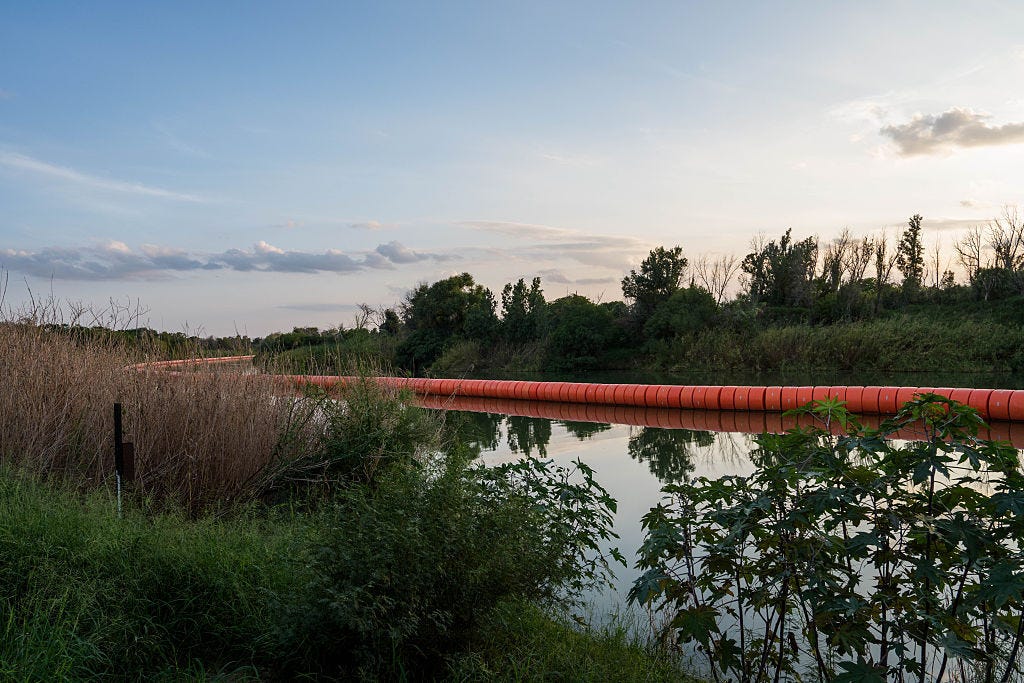
The Rio Grande: More Than 500 Miles of Floating Barriers
The Rio Grande is about to look very different.
The federal government plans to string giant floating barriers along more than 500 miles of the river. That’s roughly 40% of the Texas-Mexico border.
And if you’re thinking you’ve heard this before, you’re right.
In 2023, Texas Governor Greg Abbott installed about 1,000 feet of buoys in the river at Eagle Pass. The Biden Justice Department sued over it.
Now Washington has taken the idea and made it federal.
Jordan Elder of News 4 San Antonio and FOX San Antonio got an exclusive look at the new barriers as crews installed them near Eagle Pass.
Here’s what she found.
The new federal buoys are massive cylinders, some roughly the length of a car and weighing about a ton each. They connect closely together and are designed to spin when someone attempts to climb on them.
Federal officials say the barriers will deter crossings in dangerous areas of the Rio Grande, direct people toward safer locations and allow Border Patrol to move personnel elsewhere.
Texas’ original buoys are round spheres with spaces between them. The federal cylinders connect more closely, making them harder to climb over or pass between.
Elder identified roughly $3 billion in federal contracts containing elements related to the waterborne barrier project. But those contracts also include border wall construction and other work, so the actual cost of the buoys remains unclear.
Floodwaters swept hundreds of buoys into the river earlier this year, forcing international bridge closures at Eagle Pass and Laredo. That raised new questions about how the barriers will hold up in future floods.
Communities along the river worry about drinking water, debris, silt buildup and the effect on businesses that rely on the Rio Grande. A river scientist examining Texas’ existing barrier found deposits of silt and vegetation growing around it.
The unanswered question: How much will taxpayers spend not just installing the barriers, but maintaining them for years to come?
Elder says the project is moving quickly, with crews installing buoys from sunup to sundown, six days a week.
But important questions remain about what the barriers will cost, whether they’ll actually deter crossings and what they’ll do to the river.
And with Texas preparing to welcome Democratic Governor-elect Gina Hinojosa, who has not yet outlined her approach to the federal project, there could be another change in the state’s border-security strategy.
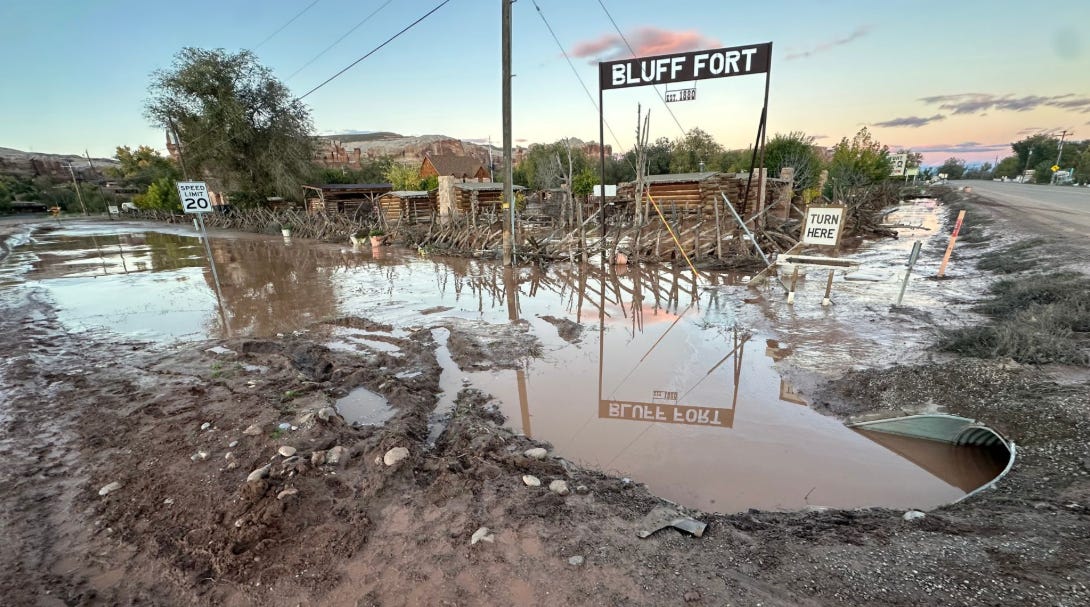
Utah Floods: What Happens When the Road Out of Town Disappears?
Most of us never think about the road or bridge we use to get out of town until it’s gone.
Near Monument Valley in Utah, devastating floodwaters have washed away bridges and roads, cutting small communities off from one another.
Samantha Hoffman of KUTV 2News traveled to San Juan County to see the destruction firsthand.
In Bluff, a town of just a few hundred residents, floodwater reached the post office, fire station, a historic monument and several homes.
But one of the most serious problems is Highway 163.
Floodwaters completely tore out a bridge connecting Bluff and Monument Valley, leaving a gap in the highway.
Residents are being directed through Kayenta, Arizona, adding at least an hour to an hour and a half to some trips.
Some residents who previously could reach medical care in about 30 minutes may now face trips of roughly two hours. Helicopter transport could become more important during emergencies.
A damaged power line threatened electricity and reliable cell service across parts of the area, raising concerns about how residents would receive evacuation warnings.
About 40 people were displaced in a community near Bluff on Navajo Nation land. Residents also reported concerns about E. coli contamination in flood-damaged homes.
The mayor of Bluff expects rebuilding could take months or years. State and federal assistance may be difficult to obtain, leaving some homeowners dependent on donations and local volunteers.
That’s the briefing for today.
How do you feel about the floating barriers in Texas? And what would happen if your own community was suddenly cut off from the roads, bridges or services it relies on?
Let us know.
The National Press
Real reporting. From real America.


