


In Today’s Episode:
A different story about data centers: Reporter Chris Daniels gets an exclusive look inside Microsoft’s data center in Quincy, Washington, where residents credit the industry with transforming their local economy.
A new use for contaminated land: American Conservation Coalition President Chris Barnard explains his proposal to build data centers on abandoned industrial sites, with tech companies paying to clean them up.
How Data Centers Transformed a Small Washington Town
Two decades ago, Quincy was a town with one stoplight, best known for its sweet corn and apple exports.
Then Microsoft arrived.
Reporter Chris Daniels traveled to Quincy and received exclusive access inside Microsoft’s data center to examine how it has changed the community.
The town has grown by more than 25%, new businesses have opened and local officials say the revenue from data centers has helped pay for major public projects.
“They have seen a new school constructed with a 550-seat amphitheater. They have seen a new hospital constructed, a new police station, a new fire station.”
Daniels says some residents even saw their property tax bills decrease as the growing tax base helped reduce the amount needed from homeowners to finance public projects.
The town sits near the Columbia River, where electricity is relatively inexpensive. Daniels says local electricity costs about 6.2 cents per kilowatt-hour, compared with a Washington state average of 13.7 cents. Microsoft also uses a closed-loop cooling system which recycles water.
Daniels says residents haven’t experienced the same problems with water and power as the rest of the country.
“What I heard repeatedly from all of these different parts of that community is that Microsoft has gone out of their way to be a partner in Quincy.”
The town may be an exception. Its location and electricity supply, along with nearly two decades of development make it difficult to compare with larger cities.
Daniels says it’s too early to know whether the same model would work everywhere.
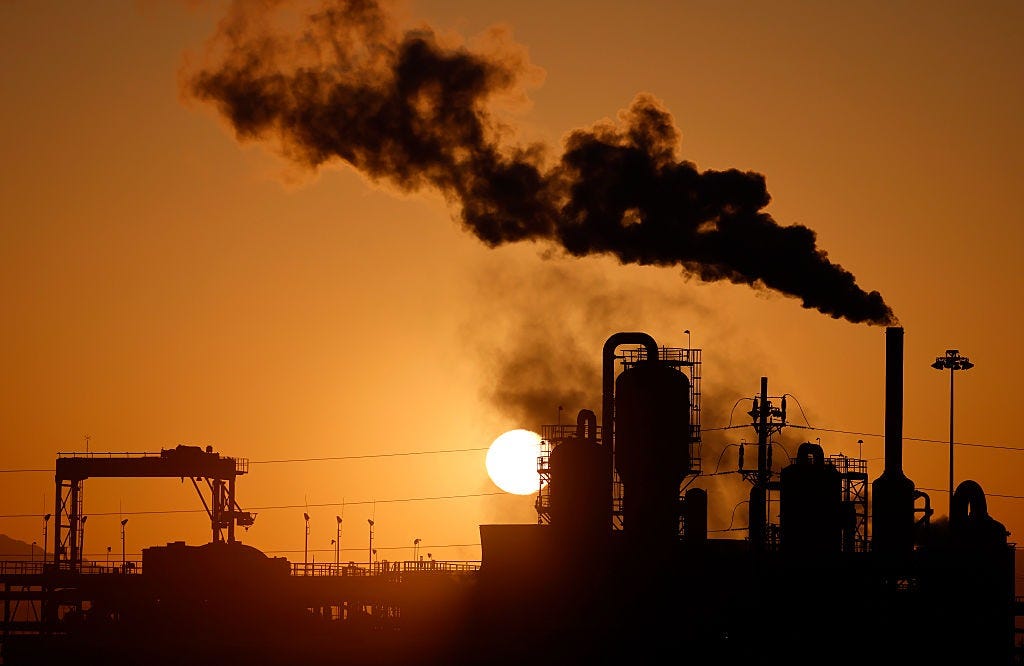
Chris Barnard, president of the American Conservation Coalition, believes the solution may be land that’s already sitting unused.
His proposal is to build data centers on brownfields and Superfund sites, former industrial properties that may contain hazardous waste and require environmental cleanup.
Superfund sites are specifically designated by the EPA as highly contaminated areas requiring remediation. Brownfields are a broader category of previously developed land where contamination can hinder any kind of reuse.
Instead of purchasing farmland or clearing undeveloped land, Barnard wants tech companies to invest in cleaning up these properties in exchange for permission to build.
“Why can’t we use land like that to put those data centers on? And Lord knows these tech companies have a lot of money.”
Barnard says the responsibility should fall primarily on the companies building the facilities, rather than local taxpayers. The proposal could also create jobs in environmental cleanup while returning unused properties to productive use.
But it brings up questions about safety.
Cleaning up contaminated land can be complicated, and disturbing hazardous material could create additional risks. Barnard says projects would require environmental assessments, EPA oversight and rigorous safety standards before construction could begin.
“Communities need to be put first. They need to have a voice in the process.”
That’s the briefing for today.
Would you welcome a data center if it helped fund schools or lower property taxes? What if the developer also agreed to clean up contaminated land in your community?
Let us know what’s on your mind at hi@thenationalpress.com
Thanks for spending part of your day with us.
The National Press
Real reporting. From real America.


