


Election Day is almost here, and roughly 40 million people have already cast their ballots.
Today, we’re checking in on how early voting is going in one of the most contested states in the country, Georgia. Then we head to Michigan, where voters are choosing a new U.S. senator and governor in less than one week.
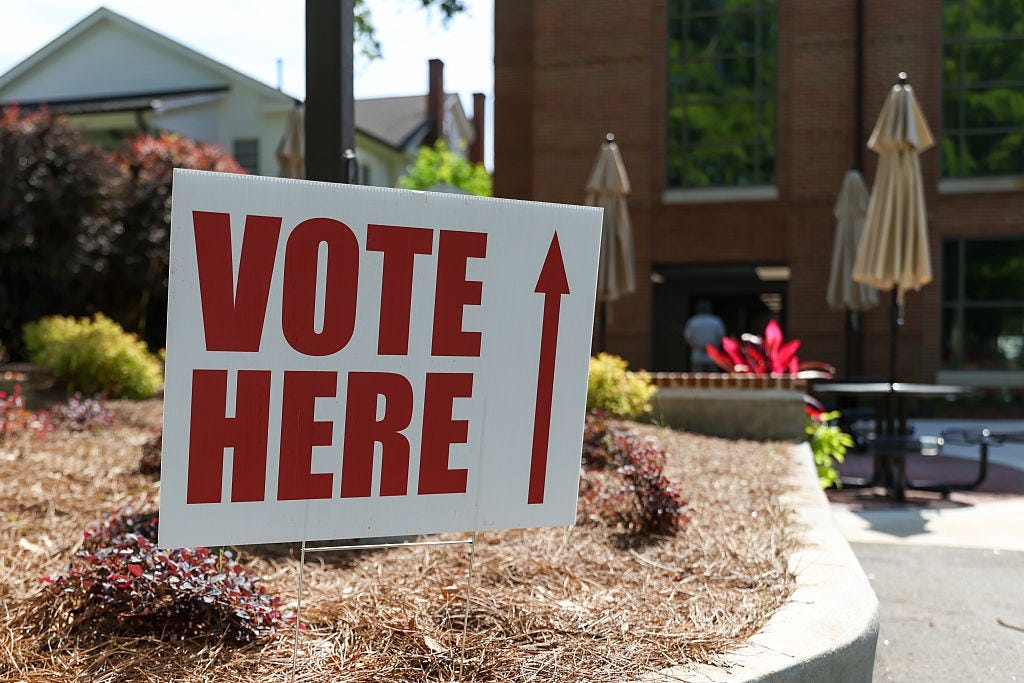
Georgia: Record Early Voting, but Can Voters Trust the Count?
Georgia voters are shattering records this fall. More than 1 million people cast ballots in just the first week of early voting, and by earlier this week, that number had passed 2 million. Early voting ends Friday.
Behind those record numbers is a fight over how votes get counted. Lawmakers pushed back a ban on the QR codes Georgia’s ballot scanners read until 2028. A majority of the state’s election board has asked the Justice Department to declare the voting machines unlawful.
Georgia Deputy Secretary of State Jordan Fuchs says the state’s voting system has been repeatedly audited and that voters can review their selections on a printed ballot before casting it. If they notice an error, they can ask a poll worker to spoil that ballot and issue another.
On a National Level: Georgia is once again a closely contested state that could help determine control of the Senate. With narrow margins expected, questions about ballot counting, audits and public trust will receive national attention.
Michigan: Two Open Seats, Nearly $300 Million and a Race Too Close to Call
In battleground Michigan, voters are choosing a new U.S. senator who could determine the balance of power in Washington. They’re also choosing a new governor. Both seats are open.
Democrat Abdul El-Sayed faces former Republican Congressman Mike Rogers in what’s already the most expensive Senate race in Michigan history, on pace to reach nearly $300 million. An October Marist poll showed El-Sayed ahead by just two points among likely voters, inside the margin of error.
Democratic Secretary of State Jocelyn Benson has been polling ahead of Republican Congressman John James. Benson is also running ahead of El-Sayed, suggesting some Michigan voters may split their tickets.
Sinclair reporter Remington Hernandez says El-Sayed is reaching out to voters who previously supported Trump, including through his populist message and public health experience. Meanwhile, Rogers is campaigning in communities where Republicans have traditionally struggled, including Detroit.
On a National Level: Michigan voted for Trump in 2016 and 2024 and Biden in 2020. Both campaigns are trying to reach voters who don’t always participate in midterms. The state could help decide control of the Senate, while its governor’s race may reveal how independently voters make their choices.
That’s the briefing for today.
What matters most in the elections in your community? Do you care more about local or federal races, and what’s driving you to the polls?
Let us know.
The National Press
Real reporting. From real America.


