


With the midterms mostly behind us, although some states are still counting, we want to look beyond the impact on Congress.
That’s because some of the biggest changes from Tuesday’s election happened closer to home, in state capitals.
Lawmakers in statehouses decide your taxes, your school budgets, abortion rights, even who pays when a new data center drives up your electric bill.
By Democrats’ own count, the party flipped 12 state legislative chambers, the most since 2008. Some close races were still being counted as that number was reported.
Texas: Democrats won the state House for the first time since 2002. Republicans retained the state Senate, so Governor-elect Gina Hinojosa will work with a split legislature.
Wisconsin, Michigan and Minnesota: Democrats made major legislative gains, including flipping both chambers in Wisconsin and winning state House majorities in Michigan and Minnesota.
Pennsylvania and New Hampshire: Democrats captured Pennsylvania’s state Senate for the first time in more than three decades. In New Hampshire, they won both chambers even as Republican Governor Kelly Ayotte won reelection.
In several Republican-controlled states, Democrats also broke GOP supermajorities, the margins that allow a party to override a governor’s veto without help from the other side.
States can expect fights over taxes, housing, health care, power bills, education and water policy. And there’s a longer game ahead: In most states, lawmakers draw congressional maps, making the balance of power important heading into 2028.
Most new legislatures get to work in January. That’s when we’ll see what all this new power buys.

Texas: Democrats Sweep the State. What Changed?
Texas just turned blue, and it wasn’t even close.
Democrat James Talarico defeated Republican Ken Paxton in the Senate race. And the state now has a Democratic governor, Gina Hinojosa, who unseated Greg Abbott as he sought a historic fourth term.
The state hadn’t elected a Democratic governor since Ann Richards in 1990.
CBS Austin reporter Andrew Lamparski has been following these races and speaking to voters throughout the campaign cycle.
Republicans conceded quickly, and Lamparski says even Democrats weren’t expecting a clean sweep of statewide races. The size of the victories came as a shock to both parties.
President Trump won Texas by 14 points in 2024. Two years later, Talarico won his Senate race by roughly 12 points. Lamparski says one of the biggest shifts came from Latino voters, particularly in South Texas.
Webb county voted for Trump in 2024. This year, more than 70% backed Talarico. Lamparski says it’s difficult to know how much came from voters changing their minds versus more voters showing up.
Affordability, education, data centers and Flock cameras all came up during the campaign. Lamparski says voters were concerned about both national issues affecting their pocketbooks and local issues affecting daily life in their communities.
Hinojosa released ads targeting Abbott’s position on data centers. Soon afterward, Abbott moderated his approach to how the industry should be regulated.
What Lamparski says:
“The data center conversation really was the turning point where I feel like people started paying attention to Hinojosa.”Hinojosa made public education a major part of her platform. Lamparski says parents frustrated with school funding and state policies responded to her message. But implementing major changes will still require cooperation in the Legislature.
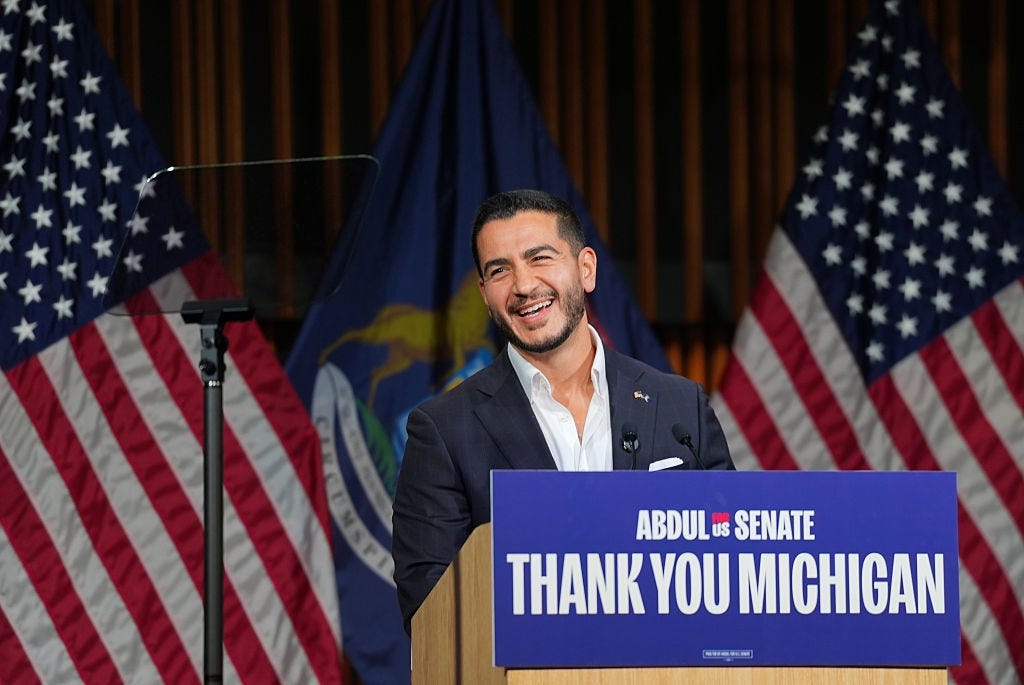
Michigan: Abdul El-Sayed Defeats Mike Rogers
Democrat Abdul El-Sayed defeated Republican Mike Rogers with approximately 52% of the vote to Rogers’ 45%.
Remington Hernandez, reporting from Lansing, says Democrats won across multiple levels of government. They now control the governor’s office, state Senate and state House.
El-Sayed focused on money in politics, the cost of living and health care. His campaign also appealed to younger voters concerned about the economy and artificial intelligence.
Hernandez says students were still lined up outside polling locations in Ann Arbor after polls closed. Many were excited by El-Sayed’s message and frustrated with the direction of the economy.
The Michigan race combined national frustration with local issues, including tariffs, high gas prices, AI and data centers. Hernandez says voters wanted to put a check on President Trump, but they also wanted policies that would improve their everyday lives.

Maine: Troy Jackson Defeats Susan Collins
Democrat Troy Jackson defeated five-term Republican Senator Susan Collins with roughly 53% of the vote to her 46%.
Jackson wasn’t supposed to be the Democratic nominee. He entered the race after Graham Platner withdrew amid sexual assault allegations he denies. Jackson campaigned for just 101 days.
Collins had served nearly 30 years in the Senate, chaired the powerful Appropriations Committee and campaigned on the federal funding she brought back to Maine. She had also survived a Democratic wave in 2020.
Jackson presented himself as a fifth-generation logger who understood working-class Mainers. Rising heating oil prices and tariffs affecting the state’s economy became major issues.
Jackson was able to tap into anger and frustration among voters who felt they weren’t being heard. Collins’ record and seniority weren’t enough to overcome the national political environment.
That’s the briefing for today.
What did you vote for in this election? Was your state capital or the nation’s capital at the top of your mind when you cast your ballot?
Let us know.
The National Press
Real reporting. From real America.


