


Good morning, and welcome to The National Press.
What happens if you get a clean bill of health on medical lab work, but years later, the science changes?
Today, we’re looking into genetic testing and notifications, and why the results you received years ago may not be the final word.
Plus, illegal secret biolabs are more than TV fiction.
Liz Gonzalez of FOX26 Fresno shares the story of two secret laboratories in California and Nevada, raising questions about what was being stored inside and why authorities didn’t know about the operations.
Then, Lisa Fletcher of Spotlight on America explains how genetic test results can be reclassified years later, potentially revealing serious cancer risks, and why there’s no guarantee patients will ever find out.
In Today’s Show
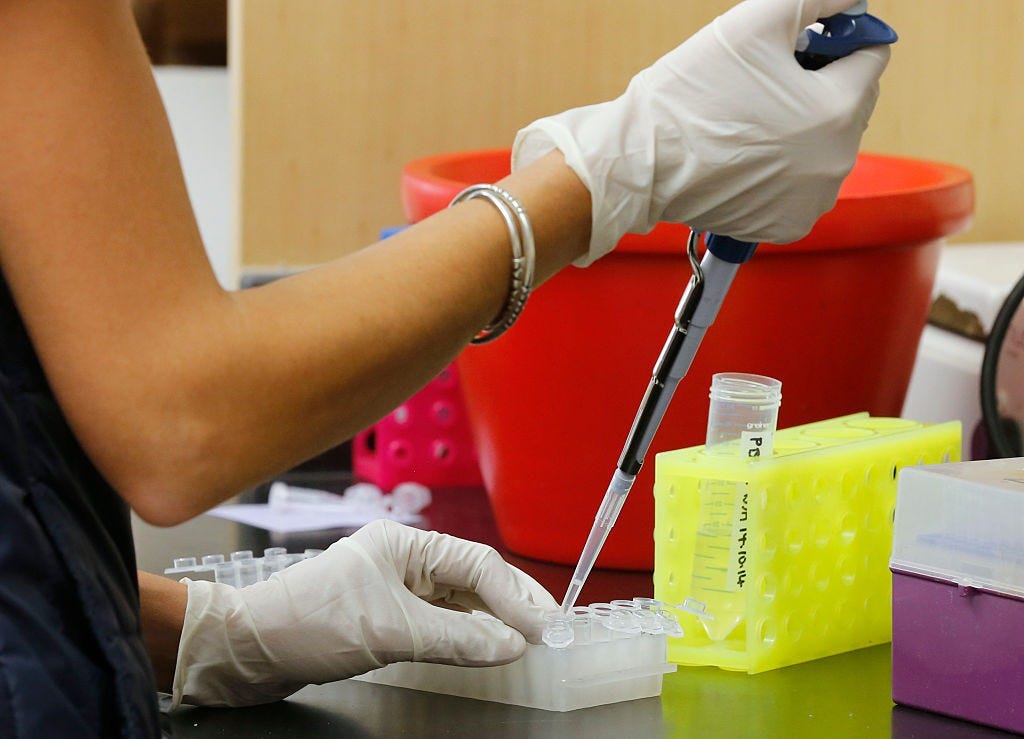
A Garden Hose, Two Secret Biolabs and Serious Questions About Oversight
In December 2022, a code enforcement officer in Reedley, California, noticed something strange.
A green garden hose sticking out of a downtown warehouse.
Inside, officials found nearly 1,000 lab mice, thousands of vials and a freezer labeled “Ebola.”
About three years later, it happened again.
A tip from a house cleaner led police and the FBI to a garage in a quiet Las Vegas neighborhood, where investigators say they recovered more than 1,000 biological samples.
And the property was connected to the same man: Jia Bei Zhu, also known as David He.
Liz Gonzalez of FOX26 Fresno has been following the story and says the problems go back to 2020, when firefighters first discovered a laboratory operation in an industrial park in Fresno.
It later moved to Reedley.
In May, a federal jury convicted Zhu on 12 counts related to selling fraudulent COVID tests and lying to the FDA.
None of those convictions involved the biological materials discovered in the facilities.
And no charges have been filed against him in connection with the Las Vegas discovery.
Liz says the investigation exposed a major lack of coordination between local, state and federal authorities.
Reedley officials struggled to determine which agency was responsible for investigating the laboratory and handling the materials.
And while local governments have since passed ordinances requiring laboratories to register, Liz says broader oversight questions remain.
Officials have not identified a public health threat from the materials.
But no federal agency keeps a comprehensive count of private laboratories operating around the country.
So how many more of these labs could be out there, and whose job is it to find them?
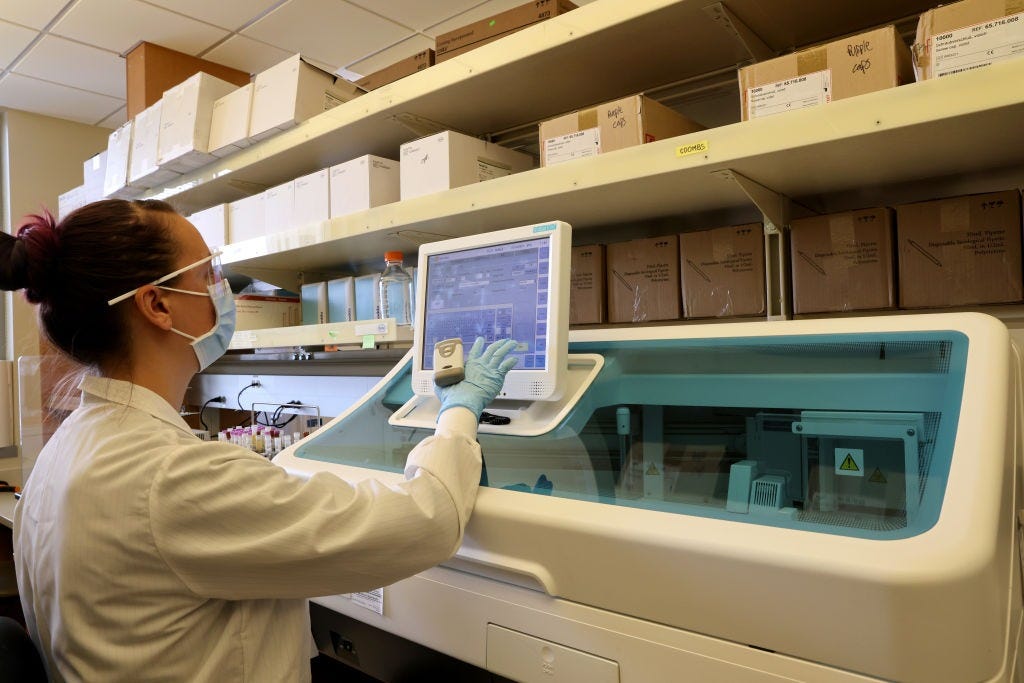
Your Genetic Test Results Could Change Years Later. Will Anyone Tell You?
If you’ve ever had a genetic test for cancer risk, you might have treated the result as the final word.
But it may not be.
Just ask Joelle Barrick.
She had a clean mammogram and no sign of cancer, but her genetic test identified variants of uncertain significance.
About four years later, her phone rang.
The testing company had issued an updated report.
The science had moved on, and the variants that were once labeled uncertain were now linked to serious breast cancer risk.
Three doctors told her she had about a 70% chance of developing breast cancer.
They recommended a preventive double mastectomy.
Joelle went through with the surgery, and doctors found cancer in both breasts.
She’s since recovered and says that without the updated information, she wouldn’t have known to take action.
Lisa Fletcher of Spotlight on America has been investigating what happens when genetic test results are reclassified.
She explains that your genes don’t change, but scientists’ understanding of different gene variants does.
Most reclassifications don’t reveal anything new to worry about. But some can identify significant health risks.
And there’s a major problem.
There’s no universal legal requirement guaranteeing that patients will be notified when their results change.
Usually, the laboratory contacts the physician who ordered the test, and the doctor contacts the patient.
But doctors retire. Patients move. Contact information changes.
And important updates can fall through the cracks.
Lisa spoke with Dr. Claudine Isaacs, who recommends checking with your doctor or testing laboratory regularly to see whether any results have been reclassified.
For people who were tested years ago, updated testing may also be worth discussing.
But the larger question remains: Whose responsibility is it to make sure patients receive information that could change their lives?
The Headlines From Our Network
Every day, our team scans local news from across the country.
Here are the stories that caught our eye.

Who Speaks for a Child Facing Deportation?
Who speaks for a child in immigration court?
For years, it was a federally funded network of nearly 100 nonprofit legal groups.
That contract ended July 31.
In South Florida, CBS12’s I-Team reports the U.S. Department of Health and Human Services now has its own team of lawyers representing unaccompanied children.
One Miami nonprofit says its legal staff representing children shrank from more than 30 people to just seven.
And Florida has about 11,600 pending cases, the most of any state.
Children who weren’t represented by lawyers received initial removal orders in 88% of cases, compared with 39% for children who had representation.
Former Florida lawmaker Anna Eskamani calls the new setup a “clear conflict of interest.”
HHS says its legal team operates separately from the attorneys advising its child-custody office and that it’s committed to ensuring unaccompanied children have legal representation.
And some in Congress are considering legislation to guarantee these children independent lawyers.
San Antonio Reopens Debate Over Public Money for Abortion Travel
Who pays, and who decides, is also the question in Texas.
News 4 San Antonio reports city leaders are revisiting whether public money can be used to help women travel out of state for abortions as they decide how to spend a $1 million women’s health fund.
The city tried once before, until Attorney General Ken Paxton sued and lawmakers passed Senate Bill 33, banning public money for abortion logistics.
But this month’s midterm elections will soon put Democrats in charge of much of Texas state government, and Paxton is on his way out.
Mayor Gina Ortiz Jones says, “Elections matter and we have an opportunity that we haven’t had in 30 years.”
But Senate Bill 33 is still the law.
Anti-abortion advocates say the city cannot spend this money on abortion travel, no matter who won the election.
And Republicans still control the Texas Senate.
So San Antonio’s plan may live or die in Austin.
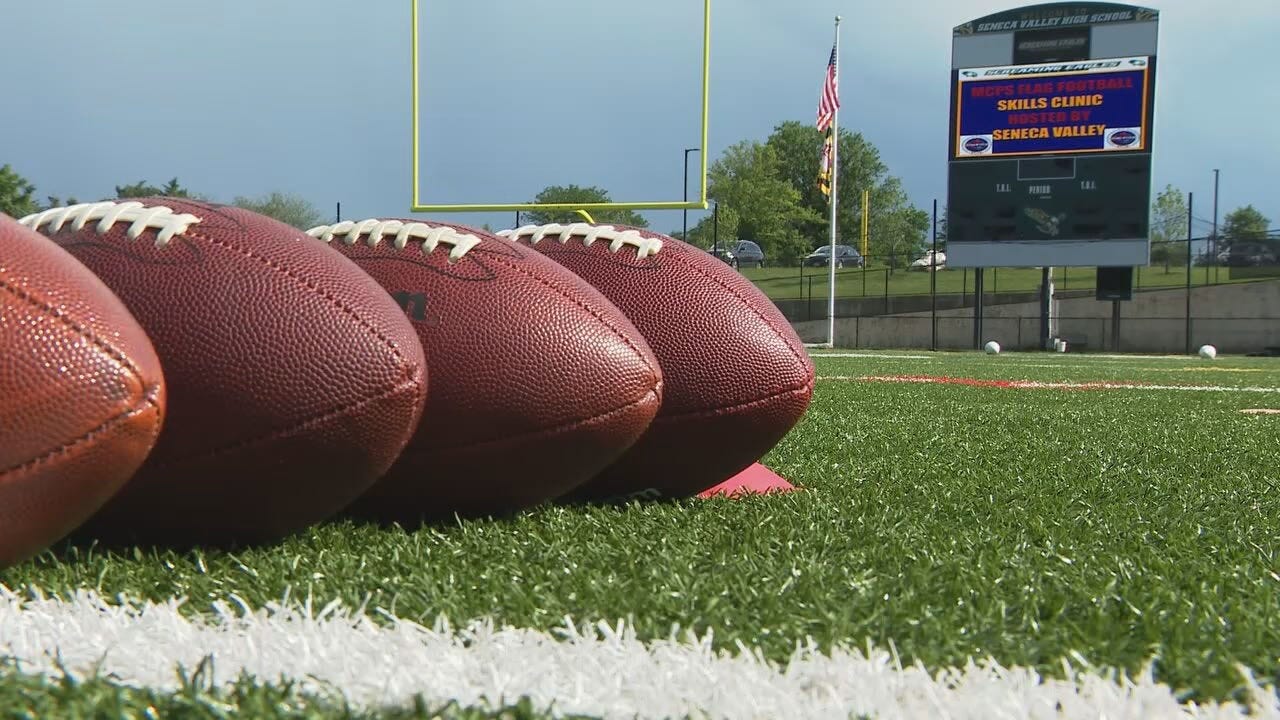
How Young Is Too Young to Play Tackle Football?
And finally, a question a lot of parents are asking: how young is too young to tackle?
New research from Boston University estimates nearly three in four former NFL players who died between 2008 and 2023 likely had chronic traumatic encephalopathy, or CTE, a degenerative brain disease linked to repeated hits to the head.
In general-population brain banks, it’s less than 1%. Even the study’s senior author called the number “astounding.”
But this isn’t just a professional football story. Top CTE researchers say children shouldn’t play tackle football until high school.
Yet legislation to limit youth tackle football has failed in at least six states.
What else should we be covering?
The most important stories in America start in communities like yours.
Now we want to hear from you.
What do you want genetic testing labs to do for patients who have years-old results? Do they have an obligation to tell patients when new science emerges?
And who do you want to see lead on regulating biolabs?
Should the federal government step in, or is this a states issue?
Tell us what you think.
The National Press
Real reporting. From real America.


