


Good morning, and welcome to The National Press.
Three years ago, the federal government sued to block the state of Texas from putting barriers in the Rio Grande.
Now Washington is deploying its own floating blockade. And we got a firsthand look.
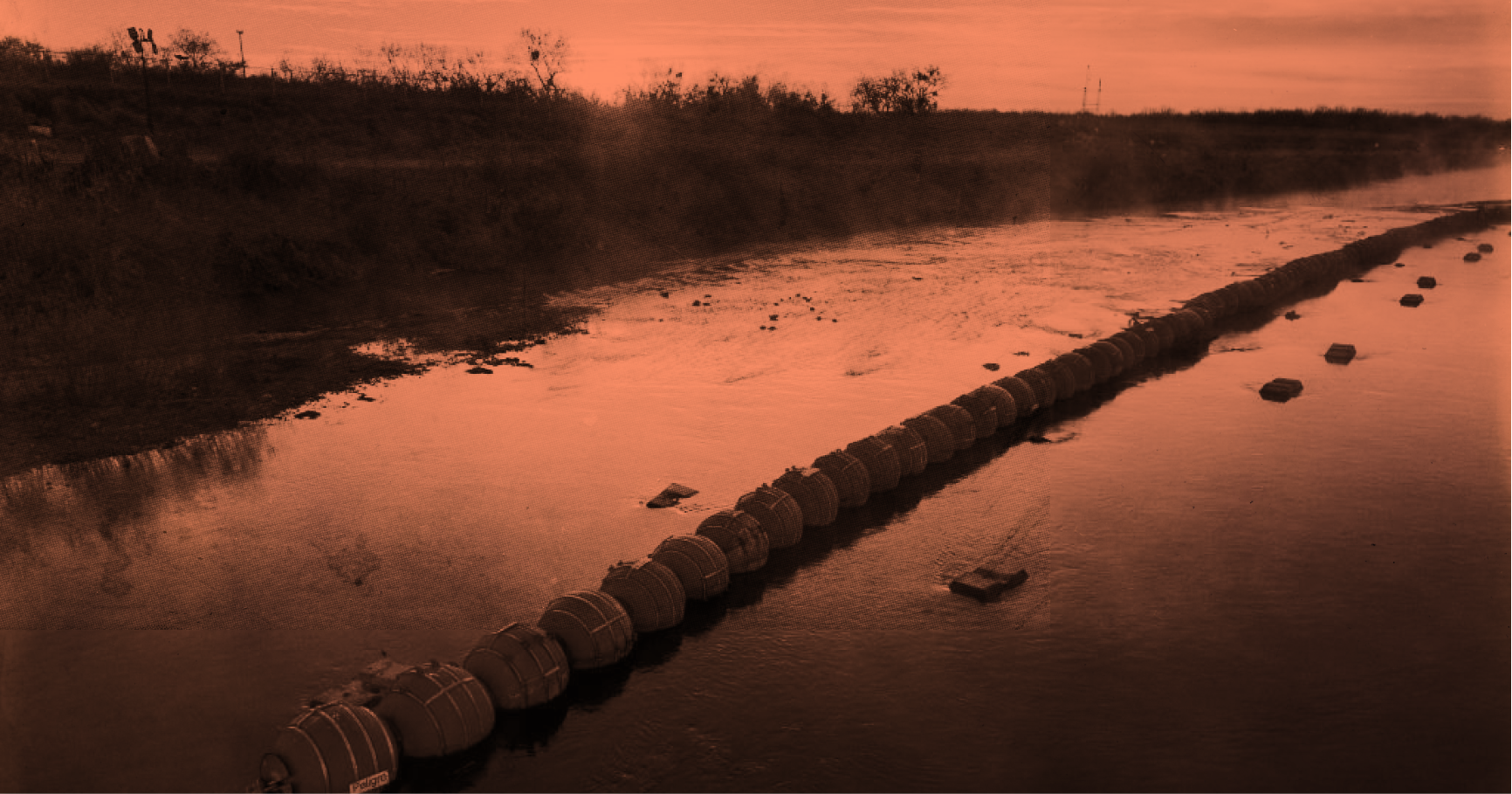
The federal government is installing massive floating barriers along more than 500 miles of the Rio Grande, roughly 40% of the Texas-Mexico border. Officials say the barriers are designed to deter illegal crossings and make the river safer. But after floodwaters swept hundreds of buoys downstream earlier this year, communities along the border have questions about the cost, the environmental impact and what happens when those barriers break loose.
Jordan Elder of News 4 San Antonio and FOX San Antonio got exclusive access as crews installed the new barriers near Eagle Pass. She joins us to explain what she saw, what the federal government hopes to accomplish and what we still don’t know about this massive project.
Meanwhile, most of us never think about the road or bridge we use to get out of town until it’s gone.
Near Monument Valley in Utah, devastating floods have washed away roads and bridges, cutting small communities off from one another. Some residents are now facing hourslong detours to get groceries, reach medical care or simply get to work.
Samantha Hoffman of KUTV 2News traveled to the isolated town of Bluff, where residents are dealing with damaged homes, threatened utilities and serious questions about how they’ll rebuild.
In Today’s Show
Washington Is Installing More Than 500 Miles of Floating Barriers in the Rio Grande. What Will They Cost?
The Rio Grande is about to look very different.
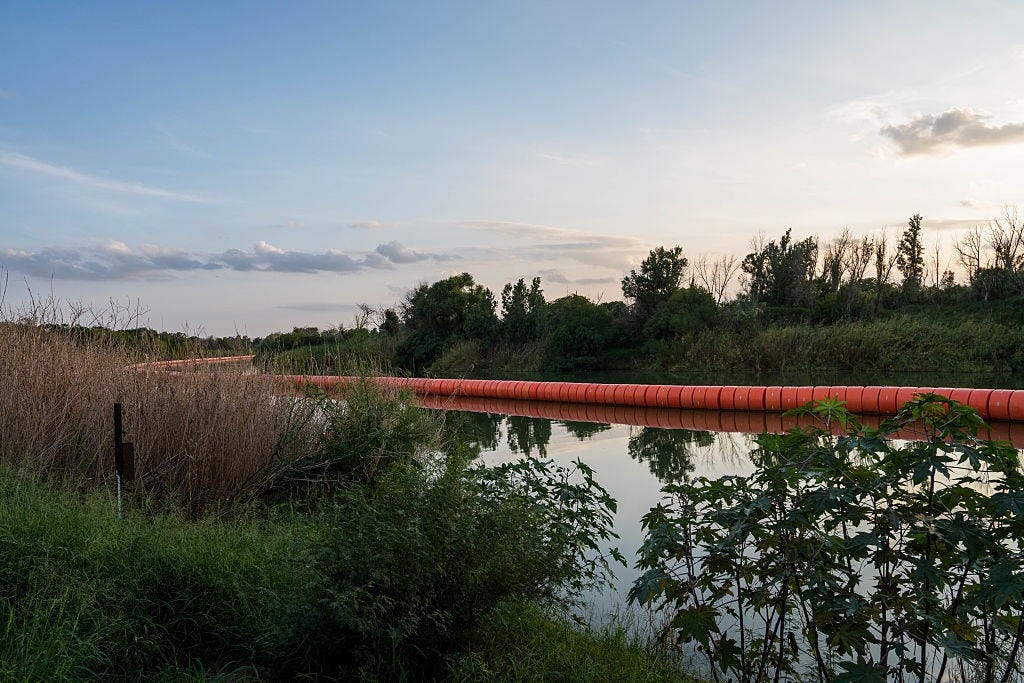
The federal government is stringing giant floating barriers along more than 500 miles of the river. That’s roughly 40% of the Texas-Mexico border.
And if you’re thinking you’ve heard this before, you’re right.
The idea isn’t new. In 2023, Texas Governor Greg Abbott dropped about 1,000 feet of buoys into the river at Eagle Pass. The Biden Justice Department sued him over it.
Now Washington has taken the idea and made it federal.
In January, then-Homeland Security Secretary Kristi Noem announced the expansion. Some of the new buoys are about the length of a car, and each one weighs a ton.
Jordan Elder of News 4 San Antonio and FOX San Antonio got an exclusive look as crews installed the barriers near Eagle Pass. She tells us the federal government has two main goals: deter people from crossing dangerous sections of the river and allow Border Patrol to move personnel to other areas.
The new federal barriers are different from the ones Texas installed. Instead of round spheres with spaces between them, they’re massive cylinders that connect closely together. They’re also designed to spin when someone tries to climb on them.
But the rollout has already been a challenge.
This summer, floodwaters swept hundreds of buoys, many still waiting to be installed, into the river. Eagle Pass had to shut down both of its international bridges. Downstream in Laredo, the loose barriers caused problems at one of the busiest land ports on the U.S.-Mexico border.
And now there are questions about the price tag.
Elder identified roughly $3 billion in federal contracts that include elements related to the waterborne barrier project. But those same contracts also cover border wall construction, manufacturing and installation, making it difficult to know exactly how much the buoys themselves are costing taxpayers.
Then there’s the river itself.
Communities along the border are worried about drinking water, flooding and businesses that rely on access to the Rio Grande. Scientists studying Texas’ existing buoys have found silt building up around the barriers, along with trees and vegetation growing through them.
Federal officials say contractors will maintain the new barriers and clear debris. But how much that will cost remains unknown.
And with Gina Hinojosa preparing to take office as Texas’ new governor, there may be changes ahead in the state’s approach to border security.
For now, Elder says installation crews are working from sunup to sundown, six days a week. And the federal government appears determined to make these barriers a permanent part of its border-security system.
So the real questions are whether the barriers will stop crossings, what they’ll do to the river and how much taxpayers will ultimately spend to maintain them.
A Utah Bridge Was Washed Away. Now Some Residents Face Two-Hour Trips for Medical Care.
Most of us never think about the road or bridge we use to get out of town until it’s gone.
But near Monument Valley in Utah, one of the most recognizable landscapes in America, devastating floodwaters have washed away bridges and roads, cutting communities off from one another.
And the damage is threatening more than just travel.
It’s affecting emergency services, health care, tourism and potentially even communications.
Samantha Hoffman of KUTV 2News traveled to San Juan County to see the destruction firsthand.
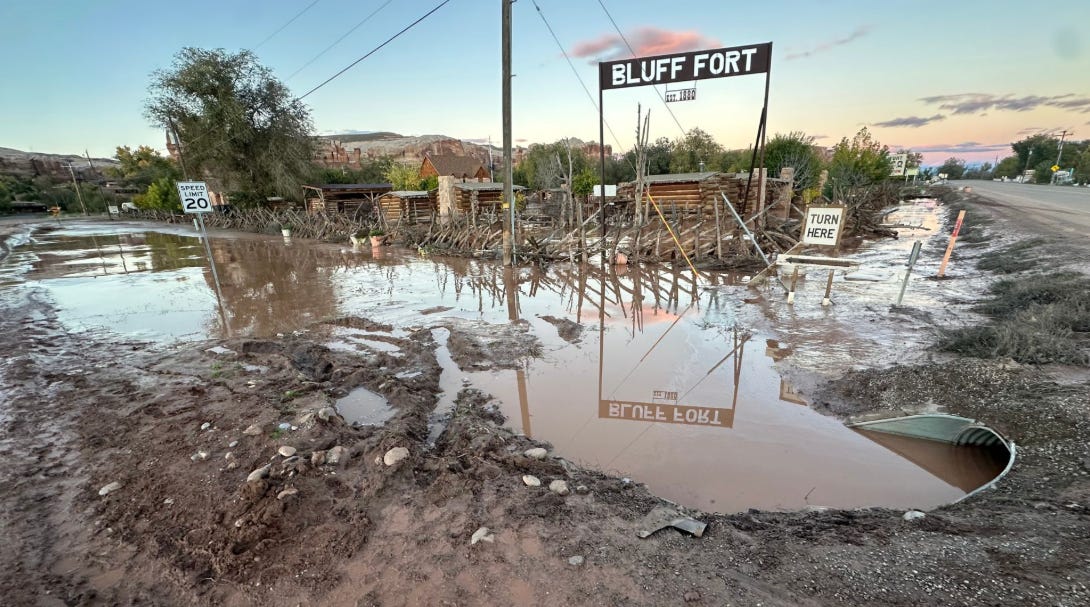
She tells us that in Bluff, a town of just a few hundred people, floodwater reached the post office, fire station, a historic downtown monument and several homes. About 40 people in a nearby community were displaced after being hit by flooding twice in about a week.
But one of the biggest problems is Highway 163.
The bridge connecting Bluff and Monument Valley was completely torn out by floodwaters, leaving a gap in the highway. There’s no getting around it.
Instead, residents are being directed through Kayenta, Arizona, adding at least an hour to an hour and a half to some trips.
And for people living near Monument Valley, that could have serious consequences.
Residents rely on Bluff for groceries, schools and, most importantly, health care. Samantha says a medical emergency that previously required a 30-minute trip could now take about two hours.
That may mean more helicopter flights when someone needs urgent care.
The damage could also hurt local tourism. People visiting Monument Valley now have to take lengthy detours, which could mean fewer customers for the restaurants, hotels and other businesses in Bluff.
The problems don’t stop there.
A damaged power line was threatening electricity and cell service across parts of the area. Residents were also worried about how they would receive evacuation warnings if communications went down.
In one community near the Navajo Nation, homeowners were concerned about E. coli contamination in flood-damaged homes. Some residents told Hoffman they felt overlooked as they tried to find help repairing their properties.
Even voting was affected. Emergency arrangements were made for some residents on Election Day because damaged roads and a flooded post office made voting difficult.
The mayor of Bluff expects recovery to take months or potentially years. Some of the infrastructure protecting the town is decades old, and several dikes failed during the flooding.
Since Samantha’s reporting, Utah Governor Spencer Cox has declared a state of emergency in San Juan and Washington counties, allowing the state to mobilize additional resources.
But residents still face questions about how much help will be available, whether they’ll qualify for state or federal funding and what happens if another major storm hits.
Hoffman says one positive development has been the community response, with residents helping neighbors even across jurisdictional boundaries.
But when homes have flooded twice and the infrastructure meant to protect them has been destroyed, the future remains uncertain.
The Headlines From Our Network
We are plugged into a network of hundreds of local reporters around the country. Every day our team scans local news from across the country so you don’t have to.
These are the stories that caught our eye, and why they matter beyond their ZIP code.
Two Kentucky Candidates Got Exactly 91 Votes Each. A Coin Flip Decided the Winner.
What happens when two candidates tie to win an election?
District 2 in Kentucky just found out.
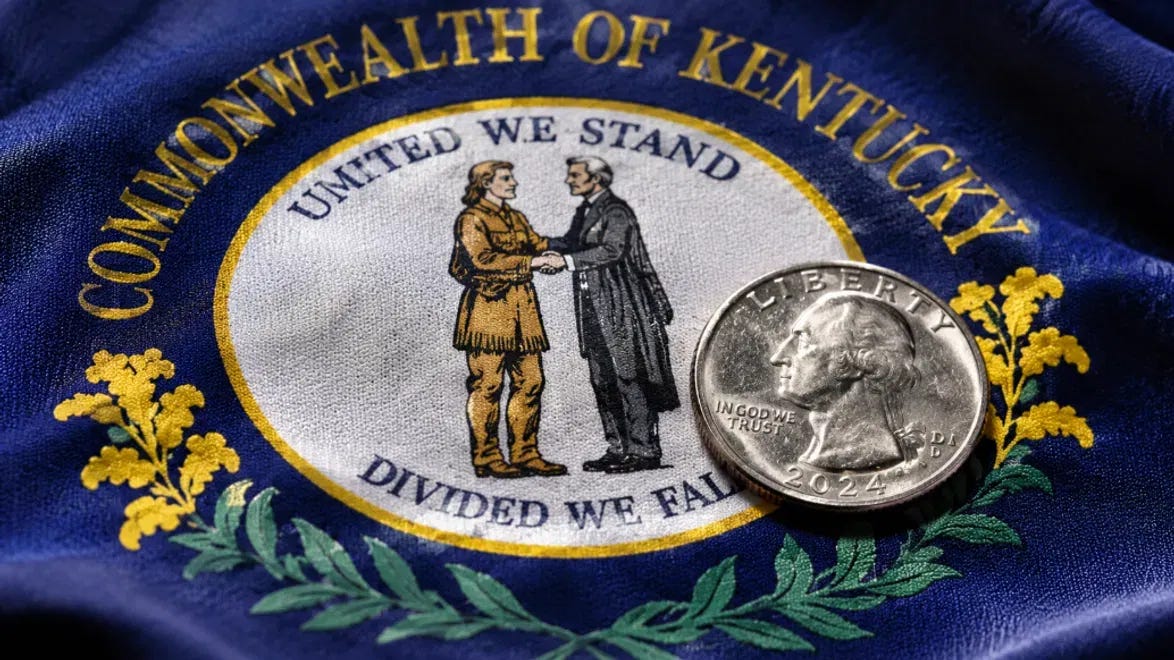
In a race for county magistrate, Republican Benny Ray Renner and Democrat Kristen Fryman each received exactly 91 votes.
Literally a dead tie.
So how did they break it? The good old-fashioned way: a coin flip.
And when it landed, Fryman came out on top.
While it might sound wild, determining an election winner by lot, such as flipping a coin, drawing names from a hat or rolling dice, is authorized under election laws in dozens of states.
So if you ever think your vote doesn’t count, remember this story out of Robertson County, Kentucky.
D.C. Wants Five Newly Elected Governors to Bring Their National Guard Troops Home
What happens to National Guard deployments when the states that sent the troops change hands?
More than 3,000 Guard troops are still patrolling Washington, D.C., part of a deployment the Trump administration began in August 2025.
Now D.C. officials are planning to ask five newly elected Democratic governors to bring their troops home.
Those states are Texas, Ohio, Georgia, Iowa and Nevada.
Together, their troops account for roughly 20% of the force currently deployed in Washington.
Councilmember Brooke Pinto would rather see more resources directed toward the city’s police department, which is facing a staffing shortage.
But new guidance from the Pentagon is moving in the opposite direction, expanding the military presence and authorizing up to 60 marked patrol cars, tactical vehicles and boats.
D.C.’s interim police chief says he first learned about those plans from a news article.
And the newly elected governors haven’t publicly committed to withdrawing their troops.
The question now is whether the change in leadership in those five states could also change the federal government’s plans for Washington.

Gavin Newsom Plans to Commute Every Death Sentence in California
And now to California, where Governor Gavin Newsom says he plans to commute every death sentence in the state.
That means the 548 people on California’s death row would instead serve life in prison without the possibility of parole.
Newsom says no one would be released.
And just for context, California has the largest death row in the Western Hemisphere. A mass commutation of this scale would be unprecedented in American history.
The state hasn’t carried out an execution since 2006.
Newsom placed a moratorium on executions in 2019, but that order left every death sentence in place.
Now he wants to end those sentences for good, saying the state cannot morally carry out executions, even while acknowledging that many Californians feel differently.
There are still legal steps to complete. Some commutations require review by the California Supreme Court.
But if the process is completed, it would mark one of the most consequential uses of clemency power in American history.
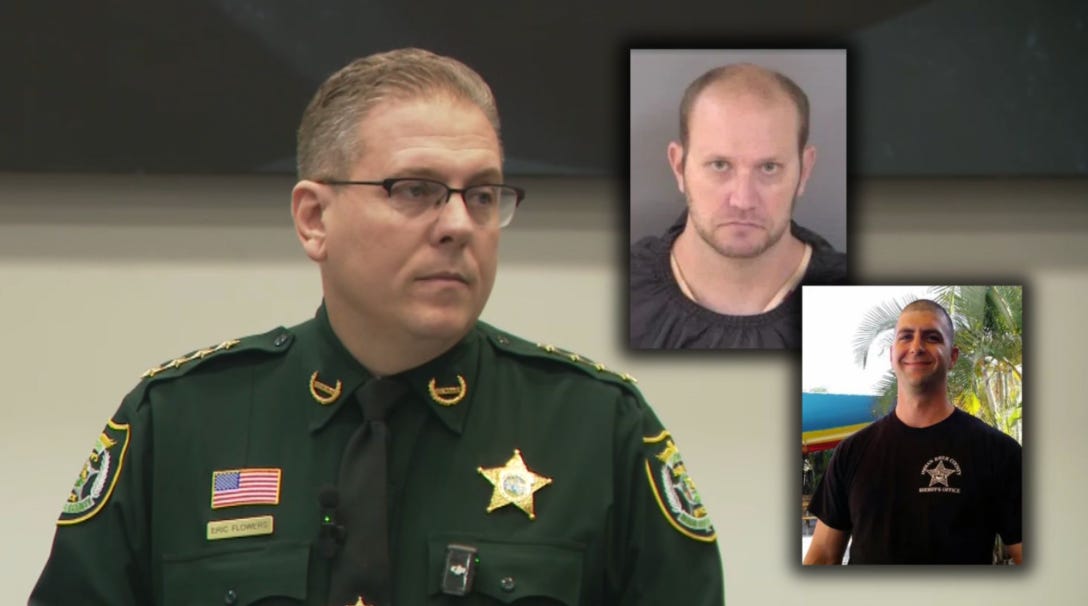
Two Florida Deputies Arrested for Allegedly Misusing Police Surveillance Cameras to Track Women
What happens when the people entrusted with surveillance technology use it for their own personal reasons?
In Indian River County, Florida, two former sheriff’s deputies have been arrested after investigators say they conducted hundreds of unauthorized searches using Flock Safety license plate cameras.
Former Sgt. John Finnegan allegedly conducted more than 900 searches over nearly two years. A separate investigation found former deputy Samuel Marcus Earman made more than 200 searches involving three women.
Both men now face felony charges.
The sheriff’s office says it will begin quarterly audits to prevent future misuse.
But as more communities install surveillance cameras, the bigger question is who’s watching the people with access to them.
What else should we be covering?
The most important stories in America start in communities like yours.
Now we want to hear from you.
How do you feel about the floating barriers being installed along the Rio Grande? Do you think they’ll make the border safer, or are you concerned about their cost and impact on the river?
And how would you handle life in your community if it was suddenly cut off? Is your town prepared if a major road or bridge is destroyed?
Tell us what we’re missing in the comments, and share the local stories you think deserve national attention.
The National Press
Real reporting. From real America.