


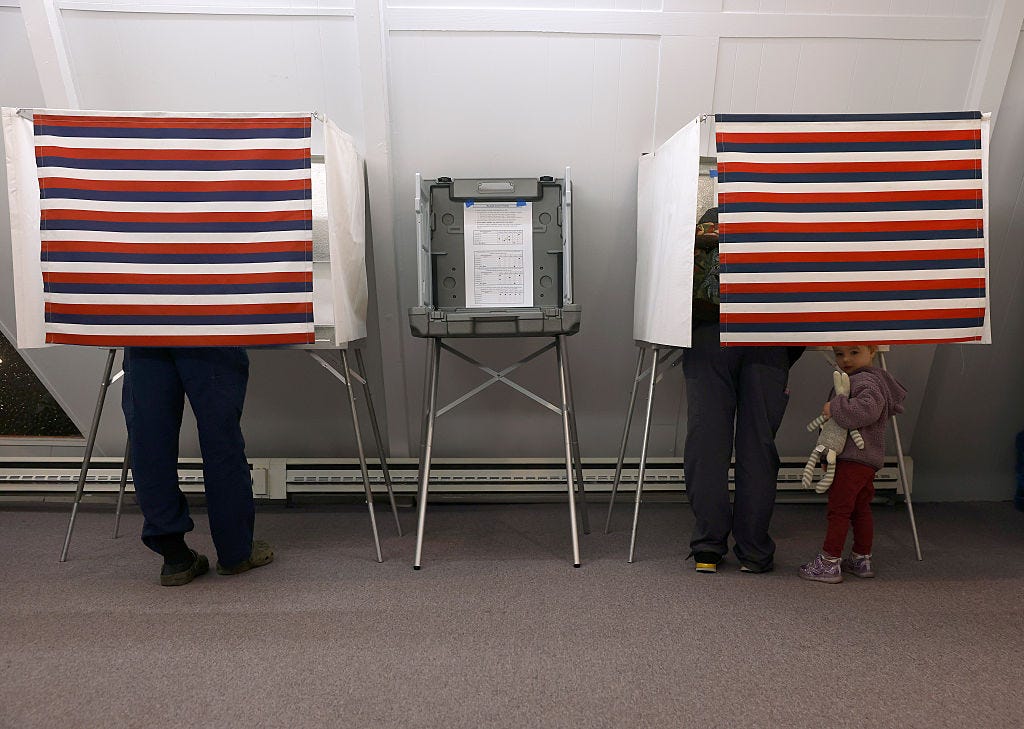
Good morning, and welcome to The National Press.
It’s easy to say that the midterm elections were a referendum on President Trump.
But for millions of voters, the election was a chance to vote on their kids’ school system, their community’s health crisis, or to remove a local leader who had lost the faith of the electorate.
Today, we’re checking back in with three states where reporters have been covering the local issues driving the national conversation.
With the midterms mostly behind us, although some states are still counting, we want to look beyond the impact on Congress.
That’s because some of the biggest changes from Tuesday’s election happened closer to home, in state capitals. Lawmakers in statehouses decide your taxes, your school budgets, abortion rights, even who pays when a new data center drives up your electric bill.
And on Tuesday, the power in statehouses shifted in ways we haven’t seen in decades.
In Texas, Democrats swept statewide races, elected Gina Hinojosa governor and flipped the state House for the first time since 2002. Even Democrats weren’t expecting a win this big.
Meanwhile, Michigan and Maine, two states that were plagued by candidate drama leading up to the election, ended up in the Democratic column. And neither Senate race was particularly close.
We spoke with CBS Austin reporter Andrew Lamparski about what happened in Texas, then checked in with Remington Hernandez in Michigan and Greg in Maine about what drove voters to the polls.
In Today’s Show

Texas Just Turned Blue. Even Democrats Were Surprised by the Size of the Victory.
Texas just turned blue, and it wasn’t even close.
Democrat James Talarico defeated Republican Ken Paxton in the Senate race. And the state now has a Democratic governor, Gina Hinojosa, who unseated Governor Greg Abbott as he sought a historic fourth term.
The state hasn’t had a Democratic governor since Ann Richards was elected back in 1990. But voters there were clearly ready for change.
Andrew Lamparski of CBS Austin has been following these races and speaking to voters throughout the campaign cycle. He tells us that no one really expected a clean sweep for Democrats in all the statewide races.
Republicans conceded quickly, and now both parties are trying to figure out what comes next.
The biggest shift Lamparski saw was among Latino voters, especially in South Texas. President Trump won Texas by 14 points in 2024. Just two years later, Talarico won his Senate race by roughly 12 points.
Look at Webb County, for example. It’s a border county that voted for Trump in 2024. On Tuesday, more than 70% of voters there supported Talarico.
Lamparski says it’s difficult to know exactly how much of that change came from new voters showing up or existing voters changing their minds. He thinks it’s a bit of both.
And the issues driving those voters were a mix of national and local concerns.
Affordability, tied to the war in Iran and rising costs, came up repeatedly. But so did local issues like data centers, education and Flock cameras.
Lamparski says Hinojosa led much of the conversation in the governor’s race, particularly when it came to data centers. She released ads targeting Abbott’s position on the industry, and the governor soon moderated his stance on how data centers should be regulated.
“The data center conversation really was the turning point where I feel like people started paying attention to Hinojosa.”
But her education platform also drew in parents frustrated with state school funding and public education policies.
Now the focus turns to what happens next. Hinojosa has promised major reforms to Texas schools, and Democrats have more influence in the state House than they’ve had in decades. But Republicans still hold the state Senate, meaning she’ll need support across party lines to put some of those changes into law.
Michigan and Maine Delivered Decisive Democratic Victories. The Economy Was a Big Reason Why.
Now we go to Michigan and Maine, two states that were plagued by candidate drama in the lead-up to the election but ended up in the Democratic column.
The issues and dynamics in both states were very different.
In Michigan, the Senate seat was open after Gary Peters decided to retire. In Maine, incumbent Senator Susan Collins was trying to win reelection after nearly 30 years in Washington.
And both races ended in decisive Democratic victories.
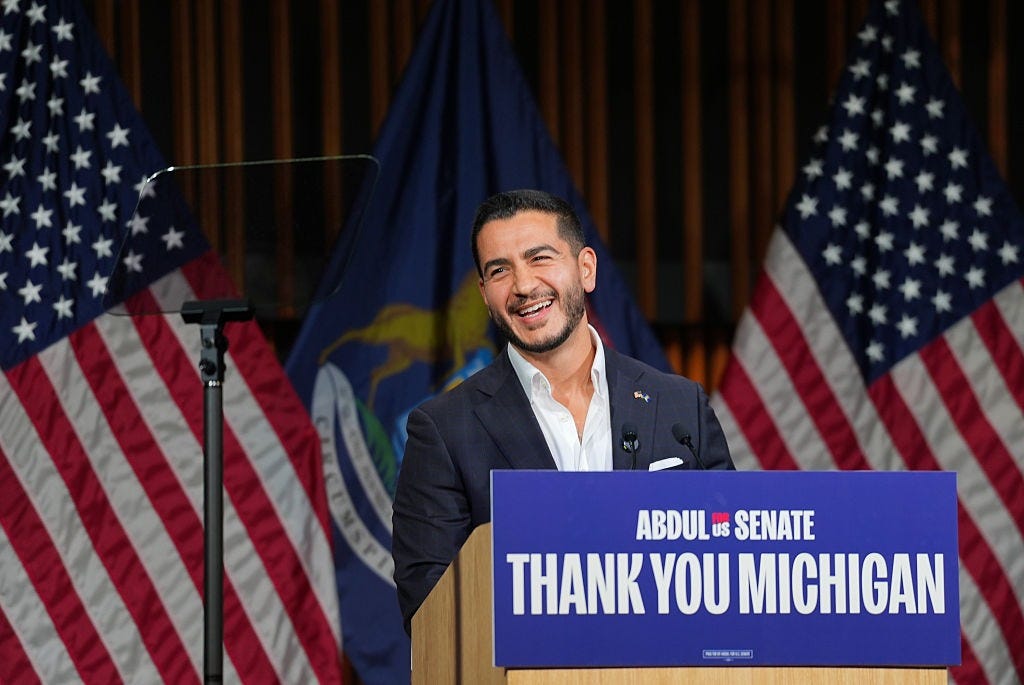
In Michigan, Democrat Abdul El-Sayed defeated Republican Mike Rogers with about 52% of the vote to Rogers’ 45%.
In Maine, Democrat Troy Jackson won roughly 53%, while Collins received about 46%.
Remington Hernandez, reporting from Lansing, tells us Democrats in Michigan are celebrating wins across multiple levels of government. For just the second time since 1982, Democrats will control the governor’s office, state Senate and state House.
And what drove voters to the polls?
Hernandez says El-Sayed’s message was consistent throughout the campaign: “Money out of politics, money in your pocket, Medicare for All.”
The economy was a major part of it. High gas prices, the cost of living and tariffs affecting states like Michigan helped drive voter frustration.
Young voters also played a major role. Hernandez says that in Ann Arbor, home of the University of Michigan, college students were still lined up to vote after the polls closed.
Many were concerned about their economic futures and the growing influence of artificial intelligence. They saw El-Sayed as someone offering a different direction.
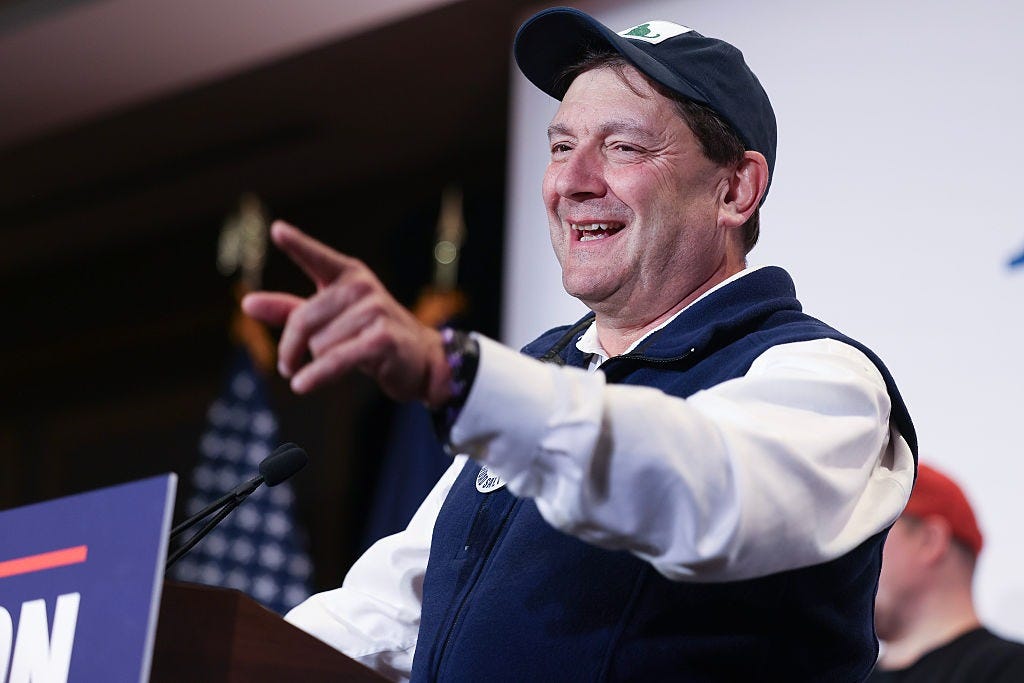
Meanwhile, in Maine, the circumstances were very different.
Collins was a five-term senator, chair of the powerful Appropriations Committee, and had built a reputation as someone who could bring federal funding back to her state.
And she had survived a blue wave before. In 2020, Collins won by more than eight points despite polls suggesting she was in trouble.
But this time, she faced an opponent who wasn’t even supposed to be on the ballot.
Troy Jackson became the Democratic nominee after Graham Platner withdrew amid sexual assault allegations. Jackson had just 101 days to campaign.
Jackson presented himself as a fifth-generation logger and working-class candidate who understood that people were hurting.
And in Maine, one of the biggest issues was the cost of heating a home.
Maine has the highest percentage of households relying on heating oil in the country. With prices approaching $6.50 a gallon, combined with the effects of tariffs and rising costs, voters were feeling the pressure.
Collins’ experience and seniority still appealed to many older voters. But younger voters were increasingly frustrated by an economy they felt wasn’t working for them.
Both reporters say this was an election influenced by national politics, but also by very real concerns about what people could afford.
But they noticed that voters appeared to be tuning out the political ads.
Maine alone saw roughly a quarter of a billion dollars spent on the Senate race, with nonstop television ads, online messages and campaign mailers. Michigan voters faced a similar barrage.
But Hernandez says many voters rejected the negativity and focused instead on kitchen-table issues.
“They tuned that out, and they really focused on the kitchen-table issues, or the issues that were important to them.”
Did voters send these new senators to Washington to fight President Trump, or are they eager to see them work across the aisle and get things done?
The Headlines From Our Network
We are plugged into a network of hundreds of local reporters around the country. Every day our team scans local news from across the country so you don’t have to.
These are the stories that caught our eye:
A Maine Town Just Voted to Ban Flock License Plate Cameras
Here at The National Press, we’ve seen our reporters around the country cover Flock camera stories almost more than any other topic, maybe besides data centers.
We’re tracking hundreds of these stories, but one out of Maine really caught our attention.
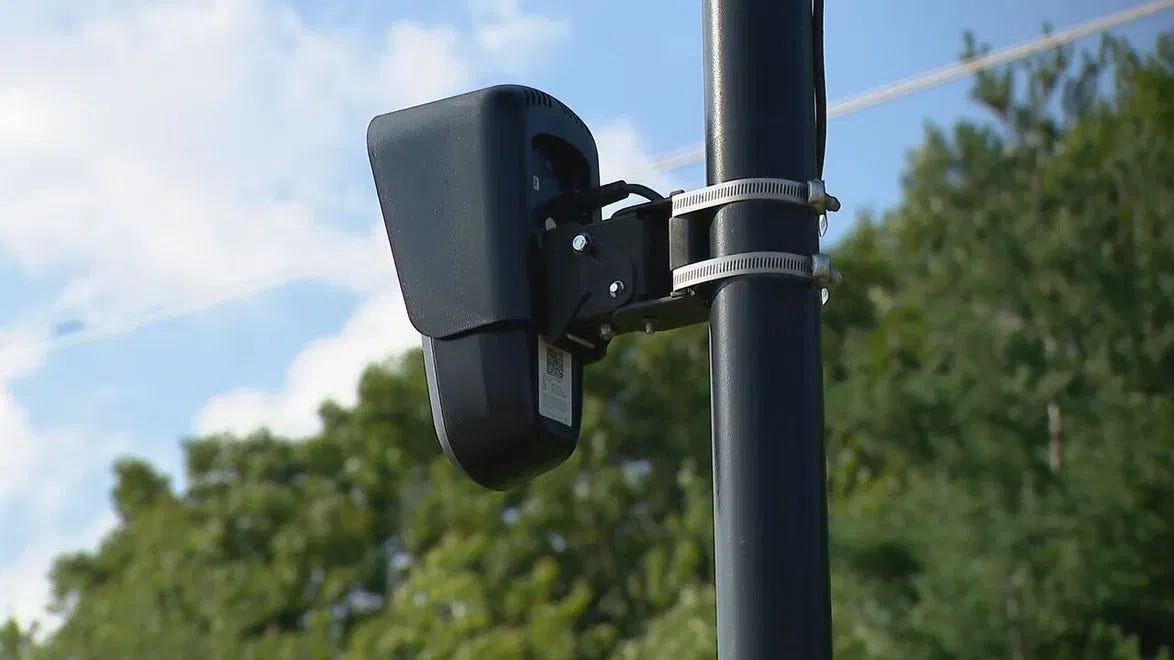
Voters in the town of York just approved a ban on automatic license plate readers made by Flock Safety.
The town will now be required to remove or shut off all Flock cameras and end its contract with the company.
The cameras use artificial intelligence to read license plates and track vehicles. Police say the data has helped with criminal investigations and missing-person cases.
But residents don’t think the tradeoff is worth it.
And Maine isn’t alone. A town in Rhode Island just did the same, and Oklahoma is considering a ban as well.
It could be a sign of what’s ahead as more communities ask whether the public-safety benefits of these cameras outweigh the privacy concerns.
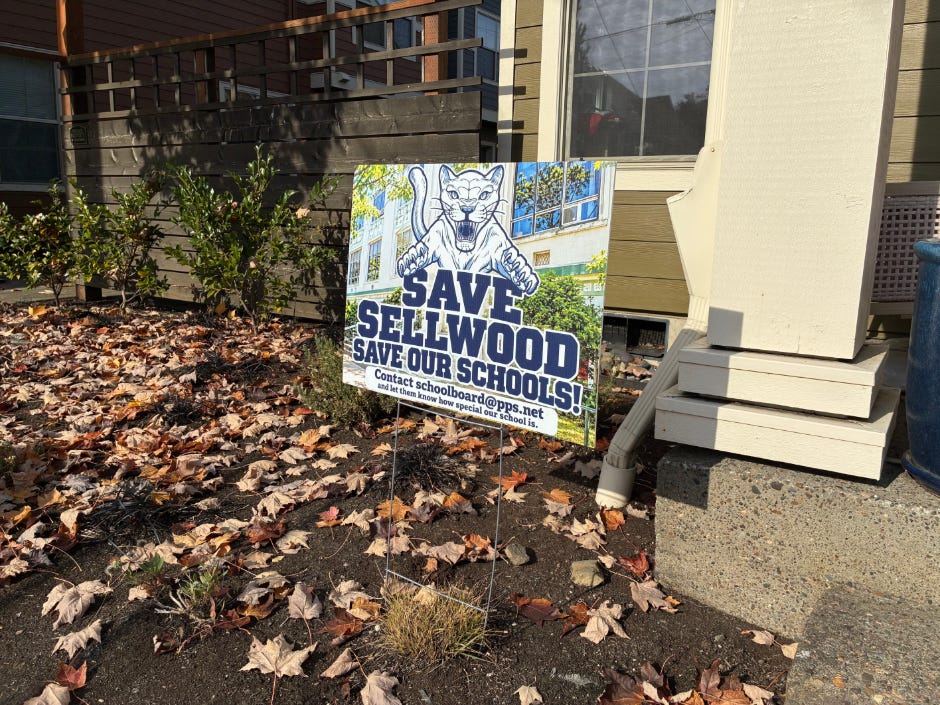
Portland Could Close Up to 14 Public Schools. What Happens to the Buildings?
Now to Oregon.
What happens to a school building after it closes?
Portland Public Schools is having to ask that question as it considers closing up to 14 schools in the area.
The school system cites declining enrollment and financial challenges as the reasons behind the potential closures.
And now Portland is studying what might happen to those buildings and properties if they’re no longer used as schools.
Those 14 school sites could become new housing, child care centers, parks or neighborhood businesses.
But what happens to all those students?
We’ll be following up as school districts in communities across the country are having to ask similar questions. More than 1,000 public schools closed across the United States in the last year, marking the fourth consecutive year that closures increased, according to the reporting cited in the episode.
For Portland, the decisions could reshape not only the school system but the neighborhoods surrounding those buildings.

Indiana Passes 100 Measles Cases as Outbreaks Continue Across the Country
We’ve been following the rise in measles cases across the country as the United States experiences a major outbreak.
And now it’s spreading in Indiana, where the state has just crossed a milestone: more than 100 cases this year.
Northeast Indiana has been especially hard hit, including LaGrange County.
Nearly a quarter of those infected have required hospitalization.
Public health officials maintain that the best protection against measles is vaccination.
But for now, the numbers continue to rise.
The situation is another reminder that an outbreak affecting one community can quickly become a concern for neighboring counties and states.

A Federal Judge Says Iowa Must Allow the Satanic Temple to Hold an Event at the State Capitol
A federal judge has ordered state officials to allow the Satanic Temple to hold a holiday event inside the Capitol Rotunda in Des Moines on December 12.
The state denied the group’s application three years in a row, citing concerns about a costume contest featuring Krampus, a character from European folklore that officials argued could frighten children. The planned event also includes caroling, coloring pages and ornament-making.
But U.S. District Judge Stephanie Rose ruled that those concerns weren’t enough to deny the group access to a public building where other religious organizations have been allowed to hold events.
The dispute dates back to 2023, when the Satanic Temple’s holiday display at the Capitol was destroyed by a man who later pleaded guilty to criminal mischief.
The ruling is preliminary, but it raises a question that extends far beyond Iowa: Can a government allow some religious groups to use public spaces while excluding others because of their beliefs?

South Carolina Restricts SNAP Purchases of Candy and Sugary Drinks
What should Americans be allowed to buy with federal food assistance?
In South Carolina, that list just got shorter.
As of November 1, SNAP recipients can no longer use their benefits to buy candy, soda, energy drinks and other sugary beverages.
Governor Henry McMaster says the restrictions are meant to encourage healthier eating. But there’s a catch: Cookies, brownies and diet soda are still allowed.
The changes are part of a broader debate over how much control the government should have over what families buy with food assistance.
What else should we be covering?
The most important stories in America start in communities like yours.
Now we want to hear from you.
What did you vote for in this election? Was your state capital or the nation’s capital at the top of your mind when you cast your ballot?
And what are the issues you want your newly elected officials to tackle first?
Tell us what we’re missing in the comments, and share the local stories you think deserve national attention.
The National Press
Real reporting. From real America.