



A Midterm Tsunami Sweeps Washington. What Happens in the States Now?
Democrats took back Congress and flipped governors’ offices in some of America’s most reliably Republican states. Now comes the hard part: delivering on promises to make everyday life more affordable.
Good morning, and welcome to The National Press.
Democrats swept races across the country, winning control of both chambers of Congress. And this was not just a blue wave. It was the feared tsunami.
But while we’re focusing on governors’ races in today’s episode, we can’t ignore what happened in Washington. Democrats won Senate seats in states Republicans have controlled for decades and are taking back the House, dealing a sweeping blow to President Donald Trump halfway through his second term.
Here at The National Press, we’ve been talking to state and local reporters covering education, energy and other issues that were on the ballot this year. Throughout the week, we’ll be following up on these important outcomes across the country.
Today, we’re focusing on five governors’ races that tell us a lot about what voters want from their state governments.
But before we jump into those conversations, let’s look at what these results mean for you.
In Today’s Show

Ohio Elects Its First Woman Governor. Did a Controversial Attack Ad Change the Race?
Let’s head to Ohio, where Democrat Amy Acton defeated Republican Vivek Ramaswamy to become the first woman elected governor in state history. It’s a major victory for Democrats in a state that has moved steadily to the right in recent years.
The issue that defined much of this race was property taxes. Both candidates agreed the cost of living was a top concern, but disagreed on how to fix it. Ramaswamy wanted to phase out the state income tax over the next decade, arguing that economic growth and government spending cuts could make up the difference. Acton proposed expanding the homestead exemption for older and disabled homeowners and creating new tax credits for working families.
But in the final weeks of the campaign, one distinctive moment seemed to change the conversation.
Ramaswamy’s campaign ran an ad featuring Acton’s estranged mother, who called her daughter a liar and urged Ohioans not to vote for her. This came after Acton publicly discussed being sexually abused as a child by her stepfather, who was later indicted on rape charges. The ad drew criticism from both parties.
Axios senior political reporter Alex Isenstadt, who broke several exclusive stories about the controversy, tells us there was internal resistance to running the ad. But after it leaked online, the Ramaswamy campaign decided to double down, announcing plans to put $4 million behind it. Subsequent ad-tracking data indicated that about $1 million was spent before it stopped airing.
An internal Republican poll suggested Acton’s lead grew after the ad began running. But Isenstadt says the bigger story was what voters were already angry about: affordability, tariffs, the Iran war and the growing influence of data centers.
For Acton, the next challenge is delivering on her promises to Ohio homeowners while finding a way to pay for them.
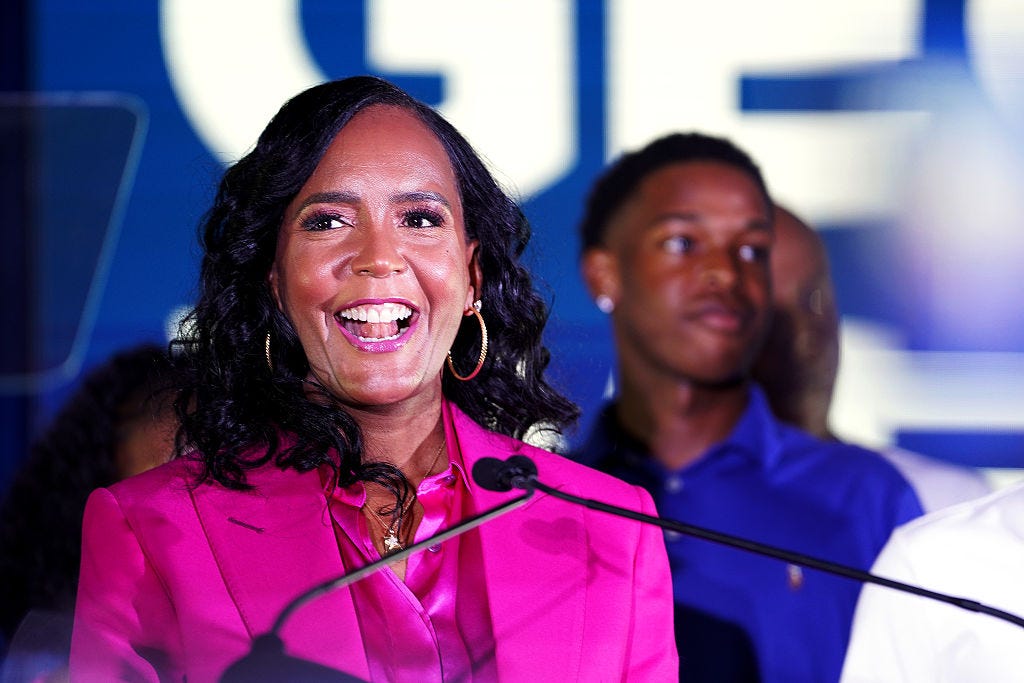
Georgia Makes History. Now Keisha Lance Bottoms Faces a Health Care Problem That Can’t Wait.
Now to Georgia, where former Atlanta Mayor Keisha Lance Bottoms defeated Republican billionaire Rick Jackson to become the first Black woman elected governor of a U.S. state.
Her victory also ends more than two decades of Republican control of the governor’s office.
And while the historic significance of her win is enormous, Bottoms will take office in January facing a health care problem that can’t wait.
Georgia’s existing Medicaid program, called Pathways, was the outgoing governor’s signature health initiative. It covers certain adults living at or below the poverty line, but participants generally must demonstrate 80 hours a month of work, school or volunteering to keep that coverage.
It was supposed to be the model for the country. Three years in, however, the program covers only about 20,000 people. The state once projected more than 64,000 would enroll.
Bottoms campaigned on expanding Medicaid, while Jackson promised to close the coverage gap through a different approach.
And Georgia isn’t alone. Starting in 2027, new federal Medicaid requirements will bring changes to eligibility, work requirements and paperwork across the country.
So whoever won in Georgia was going to walk into a complicated situation. Now it’s Bottoms’ responsibility to figure out how to cover more people, manage costs and respond to the changing federal rules.
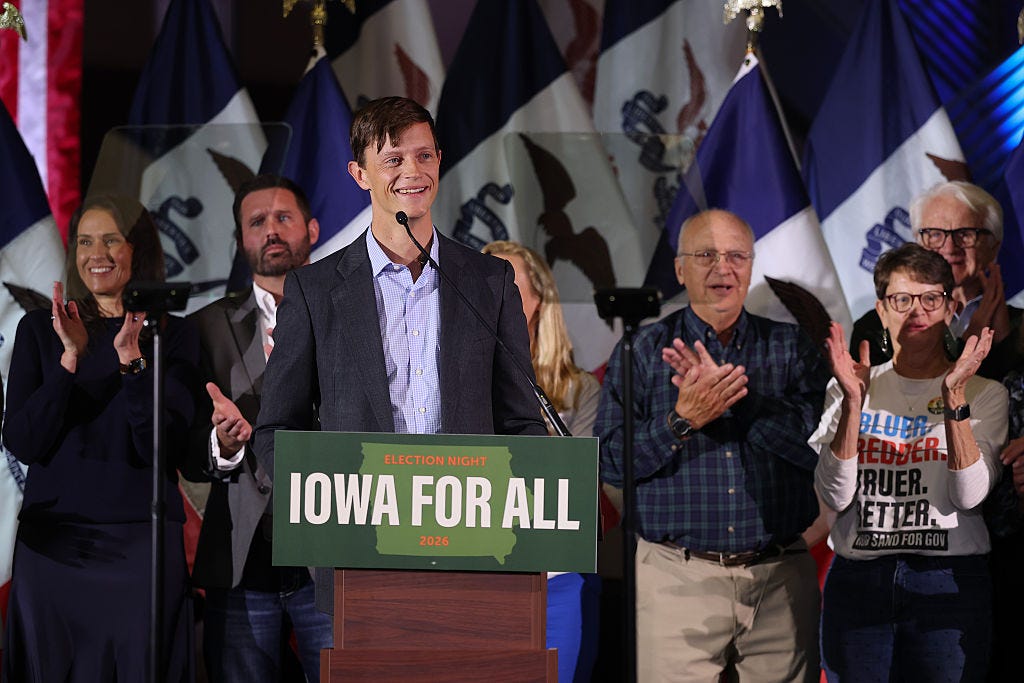
Iowa Elects a Democrat for the First Time in 20 Years.
Now another open seat: Iowa, a state Donald Trump carried three times.
Democratic State Auditor Rob Sand defeated Republican businessman Zach Lahn, becoming the state’s first Democratic governor elected since 2006.
Schools, taxes and the environment all played a part in this race. But one issue that cut across party lines was data centers and water.
To understand why data centers hit a nerve in Iowa, start in Clinton, a city on the Mississippi River. A company proposed what would be the largest data center in the state, but concerns emerged about pulling water from the Jordan aquifer, a deep underground source the city depends on for drinking water.
That news set off alarms in a state already worried about what’s in its water. Iowa has recorded one of the highest rates of new cancer cases in the country, and high nitrate levels from farm runoff have caused serious concerns about drinking water in the Des Moines area.
Both candidates argued that data centers should lose their tax breaks and pay their own power bills. Sand has also advocated for closed-loop cooling systems that recycle water rather than continually drawing from local supplies.
But agreeing is the easy part.
Now the new governor will help decide whether those tax breaks actually end, how much oversight the state requires and who approves the permits for massive new facilities.
Because in Iowa, this was never just about data centers.
It’s whether the water from your tap will still be there, and still be clean, 10 years from now.
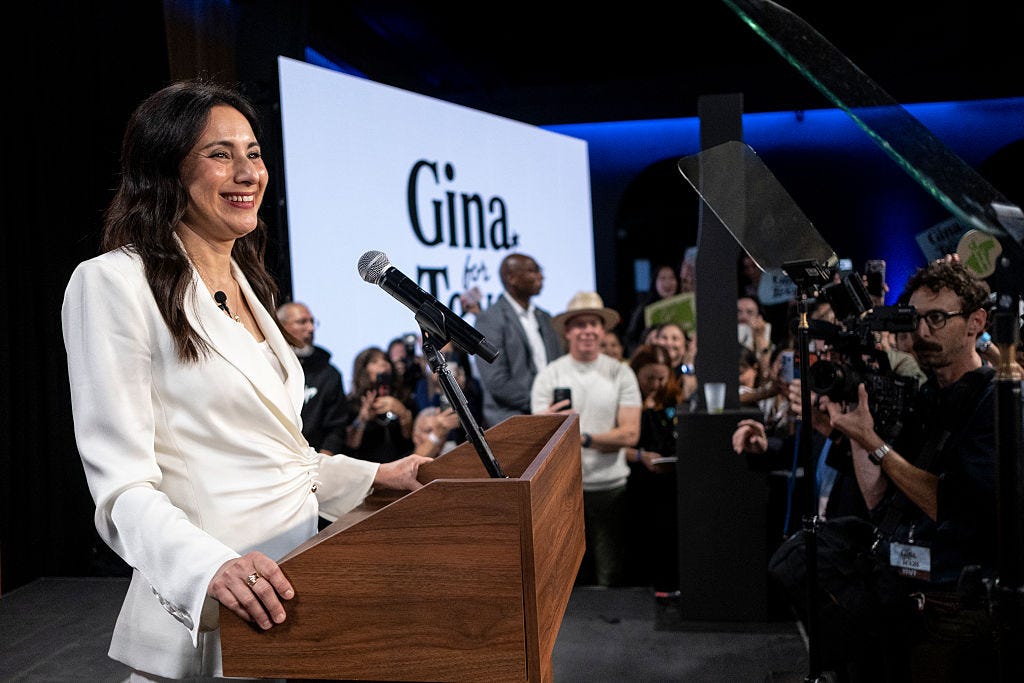
Texas Democrats Pulled Off the Unthinkable. Even Republicans Admit They Got Too Comfortable.
Now Texas, which, on paper, shouldn’t have been close.
Republican Governor Greg Abbott was seeking a record fourth term in a state that hadn’t elected a Democratic governor since 1990.
He’d won every previous gubernatorial election by double digits. And a year ago, most Texans couldn’t have told you who his Democratic opponent, Gina Hinojosa, was.
But all that changed.
Hinojosa defeated Abbott to become Texas’ first Latina governor, and Democrats also won the state’s U.S. Senate race, where James Talarico defeated Republican Ken Paxton.
So what happened in a state Republicans had considered safely red for decades?
We spoke with D’rinda Randall, chair of the Republican Party of Texas, who acknowledged that the party had gotten too comfortable and hadn’t communicated effectively with voters.
Randall told us that Democrats were better at connecting with people who were struggling with the rising cost of living, particularly housing costs. She also acknowledged that concerns about data centers, electricity, water and land use had become major issues.
And she offered a revealing explanation of the Republican mindset heading into Election Day.
“We’re Texas and we will never turn blue. Well, that’s not what happened.”
But Texas Democratic Party Chairman Kendall Scudder, who joined us from Austin, says Democrats saw an opportunity that national observers had overlooked.
“Texas is not a ruby red state. Texas is a nonvoting state.”
Scudder says Democrats stopped conceding parts of the state, organized in communities that hadn’t been engaged in years and worked to turn out voters who had previously stayed home.
He also pointed to Hinojosa’s promise to overhaul public education, ending the state’s school voucher program and redirecting money toward public schools and teacher pay.
And then there’s the state’s enormous data center boom. Hinojosa wants a moratorium on new facilities until lawmakers create stronger protections against rising electricity and water bills.
But Scudder also had a warning for his own party.
“It’s one thing to win, it’s another thing to deliver.”
Texas Democrats have achieved something they spent more than three decades trying to accomplish. Now voters will find out whether their new governor can deliver on the issues that helped get her elected.
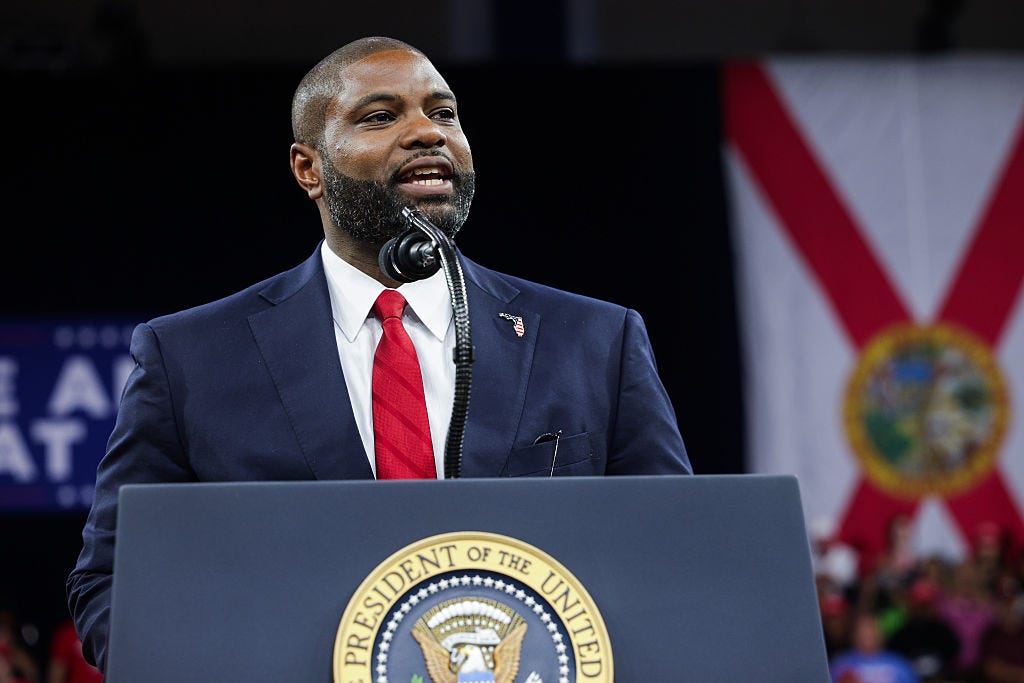
Florida Stayed Republican. But Byron Donalds’ Narrow Victory May Be a Warning.
And finally, Florida.
Florida hasn’t elected a Democratic governor since 1994, and this year’s race to replace Ron DeSantis was supposed to be an easy hold for Republicans.
Byron Donalds secured President Trump’s endorsement early and cruised through the Republican primary.
And he did win, defeating Democrat David Jolly to become Florida’s first Black governor.
But it was much closer than many Republicans expected.
DeSantis won reelection by nearly 20 percentage points in 2022. Four years later, Donalds won by roughly a single percentage point, despite vastly outspending his Democratic opponent.
To make sense of the race, we spoke with pollster Michael Cohen, author of Modern Political Campaigns, who says Florida’s changing electorate and a national mood of frustration helped make the contest competitive.
Cohen says a narrow win can be almost as politically uncomfortable as a loss.
“There’s nothing worse in politics than losing. But what comes very close to that is a narrow win like they got tonight.”
Cohen argues that Donalds will now have to build bridges across party lines to address some of Florida’s biggest problems, particularly homeowners insurance.
Florida residents already pay some of the highest insurance premiums in the nation. Donalds campaigned on his Bring Down the Bill proposal, which would keep the private insurance market in charge, create a public scorecard to compare insurers and reduce a surcharge homeowners pay into the state’s hurricane fund.
He says the plan could lower insurance rates by 20% to 30%.
We also spoke with Florida Democratic Party Chair Nikki Fried, who says the result proves Democrats shouldn’t count Florida out.
“Florida continues to be that battleground state, that purple state that people cannot count out.”
Fried pointed to rising rents, property insurance, utility bills, gas prices and the economy as the issues that motivated voters.
She also argued that Democrats could have performed even better with more national investment, and called on Donalds to remember that he now represents Floridians who didn’t vote for him, too.
The question for Florida voters is how much government should intervene in the insurance market and who ultimately picks up the bill.
For homeowners struggling to afford coverage, those decisions could have a very real impact.
Nearly Half of Americans Identify as Independents. So Why Can’t They All Vote in Primaries?
Election results tell us who’s going to run these states.
But there’s an earlier question that shapes every one of these races: Who gets to choose the candidates in the first place?
In most states, that happens in a party primary. And who can vote in those depends on where you live.
According to Gallup, a record 45% of Americans identify as independents, including majorities of Gen Z adults and millennials.
Yet in some states, those voters can’t participate in party primaries without registering with a political party or choosing a party ballot.
John Opdycke, founder and president of Open Primaries, joined us to discuss the fight to change those rules.
In Massachusetts, his organization supported Question 3, which would have replaced separate party primaries with one all-party ballot, allowing everyone to vote for the candidates they preferred. The two most popular candidates would advance to the general election, regardless of party.
But Massachusetts voters rejected that proposal on Tuesday.
Meanwhile, Alaska voters were deciding whether to repeal the open-primary and ranked-choice voting system they adopted in 2020. Early returns show the repeal effort trailing, although significant counting remains.
Opdycke says the fight isn’t necessarily about getting more independent candidates elected.
“The primary beneficiary of open primaries is not independent candidates. It’s not candidates at all. It’s voters.”
He argues that voters should have a say in publicly funded elections, regardless of whether they belong to a party.
And he says the challenge goes beyond changing the law. Voters also need to know when they’re eligible to participate and why primaries matter.
Because in many parts of the country, the most consequential decisions about who’s going to represent you happen long before November.

The Headlines From Our Network
We are plugged into a network of hundreds of local reporters around the country. Every day our team scans local news from across the country so you don’t have to.
These are the stories that caught our eye:
Democrats Win Both Chambers of Congress in a Sweeping Midterm Victory
While our focus today is on governors’ races, the biggest national result came from Washington.
Democrats won control of the House and Senate, dealing President Trump a major setback halfway through his second term.
The party won Senate seats in Republican strongholds, including Texas, Ohio, Iowa, Kansas and South Carolina. Democrats also flipped House seats across the country, including in districts where Trump had won comfortably just two years earlier.
The results represent a sweeping change in the balance of power in Washington. Democrats will have greater ability to investigate the administration, hold hearings, reject nominations and block legislation. But with Trump still in the White House, the next two years could also bring more partisan gridlock.
Voter concerns about the cost of living, the Iran war and government corruption were central to the election.
→ Read the Full Story — Associated Press
James Talarico Wins in Texas as Democrats Flip Senate Seats Across the Country
Texas wasn’t just the site of a historic governor’s race.
Democrat James Talarico defeated Republican Ken Paxton, giving the state its first elected Democratic U.S. senator since 1988.
And Texas wasn’t alone.
In Ohio, former Democratic Senator Sherrod Brown defeated Republican Jon Husted. Democrats also flipped Senate seats in Iowa, Kansas, North Carolina and South Carolina, where Republicans had been expected to perform much more strongly.
Those victories gave Democrats control of the Senate and raised questions about what went wrong for Republican candidates in states that had appeared safely red.
Massachusetts Voters Reject Open Primaries. Alaska’s Election Rules Remain in Play.
In Massachusetts, voters rejected Question 3, a proposal that would have replaced separate party primaries with one all-party primary.
Supporters argued that the change would give voters more choices and make elections more competitive. Opponents warned it could favor candidates with more money and reduce choices in the general election.
Meanwhile, Alaska voters were deciding whether to repeal the open-primary and ranked-choice voting system they approved in 2020.
Early returns showed the repeal effort trailing, but many ballots remained uncounted. A similar proposal failed in 2024 by just 743 votes, illustrating how much the outcome can change as additional ballots are counted.
The results reflect a larger debate about how much power political parties should have over the candidates voters are allowed to choose.
More Historic Firsts: From Georgia to Texas and Florida
The election produced a number of historic firsts across the country.
In Georgia, Keisha Lance Bottoms became the first Black woman elected governor of any U.S. state. In Texas, Gina Hinojosa became the state’s first Latina governor.
Ohio elected its first woman governor, Amy Acton. And Florida elected Byron Donalds, the first Black governor in the state’s history.
The milestones represent a change in political representation, but each of these governors will face familiar challenges when they take office: making housing affordable, improving education, addressing health care costs and finding ways to manage state budgets.
What else should we be covering?
The most important stories in America start in communities like yours.
Now that the election is over, we want to hear from you.
What’s the most important issue in your state or community? How did the campaign season address those concerns, or perhaps ignore them?
And now that voters have made their choices, what do you want your new governor or members of Congress to do first?
Tell us what we’re missing in the comments, and share the local stories you think deserve national attention.
The National Press
Real reporting. From real America.