


Good morning.
Most of us experience airport security through the TSA checkpoint. But what happens when someone never goes through it?
At Fort Lauderdale-Hollywood International Airport, authorities say 32-year-old Samuel Prescott Lackey climbed an eight-foot, barbed-wire fence, entered a restricted area and eventually boarded a parked JetBlue plane, where he was later found asleep in a bathroom.
The bizarre incident raises a bigger question: How secure is an airport beyond the TSA checkpoint?
Today: Lyndsay Keith spoke with CBS 12 I-Team Chief Investigator Mike Magnoli, who reported on how Lackey made his way from outside the airport fence onto an aircraft.
Investigators eventually found surveillance video showing Lackey near the airport perimeter. The footage helped them reconstruct what happened, but only after the breach had already occurred.
“That was discovered after the fact. So what that tells you is there was no one watching those cameras and those monitors in real time.”
She also spoke with Sheldon Jacobson, a University of Illinois professor whose research helped inform the risk-based security approach behind TSA PreCheck.
Jacobson explained that perimeter security is a shared responsibility involving airports, TSA, the FAA and local law enforcement. Airports rely on a combination of fencing, cameras, patrols, technology and employees working around aircraft.
But no security system can eliminate every risk.
“It’s a question of cost and benefit,” Jacobson said. Securing every inch of a sprawling airport like a TSA checkpoint would require enormous resources, he argued. Instead, airports have to determine where those resources can reduce the most risk.
That means a fence is only one layer. If someone gets over it, cameras, patrols, airport workers, flight crews and access controls are supposed to provide additional opportunities to detect them.
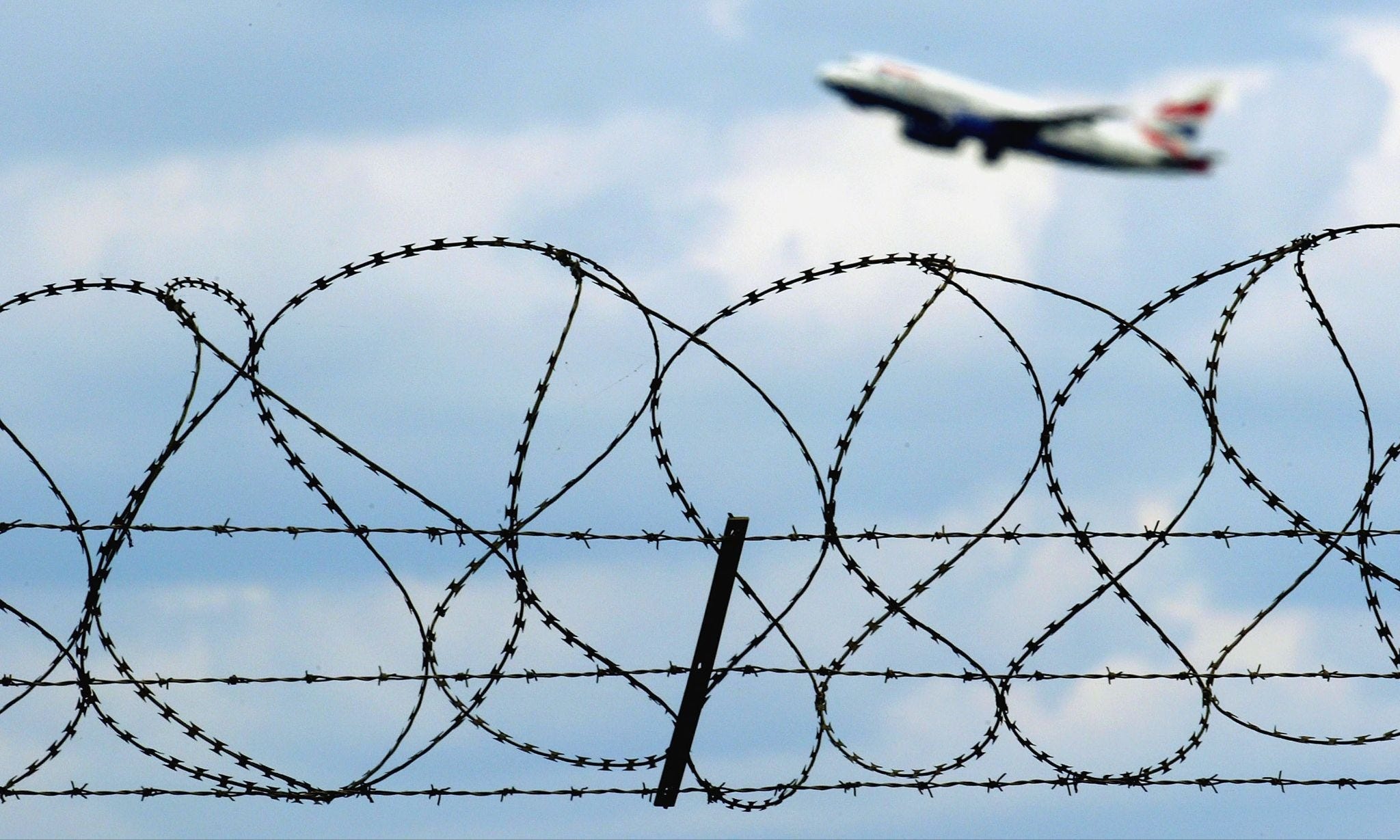
The Fort Lauderdale incident is notable because Lackey allegedly made it through several of those layers and remained on an aircraft for hours before he was discovered.
Jacobson estimates that perimeter breaches happen roughly two to three times a month nationwide. They are rare compared with the hundreds of millions of people who travel by air, but they raise an important question: Are airports putting enough resources into the security passengers never see?
The answer may not be to build a bigger fence. It may be to make sure that when one layer fails, another is ready to catch it.
That’s the briefing for today.
Knowing that these breaches happen, do you feel safe?
And should major airports invest more in perimeter protection, even if the cost is high and the risk can never be reduced entirely to zero?
Join the conversation and tell us what’s happening in your community that deserves wider attention.
Thanks for spending part of your day with us.
The National Press
Real reporting. From real America.
Are you affected by this story in your community? Do you have something you’d like to share? Write to us at hi@thenationalpress.com


