


Across the country, turkeys will adorn the dining room table: roasted, spatchcocked, smoked, wet and dry-brined. There’s nothing more patriotic than Ben Franklin’s favorite bird. But before we eat tens of millions of them, I wanted to know where they come from.
So I asked a farmer.
At 55, John Lima started his second act by buying 150 acres in the Jersey countryside. Ninety minutes outside Brooklyn, I met him, along with his cows, pigs, chickens, and most importantly, his 180 turkeys.
Between the hard-hitting questions—what’s the most inventive turkey dish? And what keeps them from flying away? (Spoiler: they can’t fly)—I wanted to know how he runs a regenerative farm.
“Regenerative” meaning his turkeys roam on grass, eat bugs and non-GMO feed, and their “bird house” (a mobile, tented shelter) rotates around the farm to fertilize the soil. He also has a USDA-inspected slaughterhouse on site.
Compare that with an industrial farm, where the birds are often packed into indoor houses and never see the light of day. According to John, the impact is a less healthy bird, and a less healthy cut. “The chicks are put in confined areas… they don’t get a chance to move around and they never see grass,” he stressed.
Of course, none of this comes cheap. John’s birds sell for about $7.20 a pound, so a 25-pound turkey will run you around $180. At Costco in New York City, a full turkey goes for about $24—making John’s nearly eight times more expensive. Still, John explains, “We’re very busy. We’re sold out all the time.”
Even so, he understands the sticker shock: “It’s really a tough thing because if you’re on a tight, limited budget and you have no money to spend, then you’re buying the cheapest food for your family, which in turn is not the quality you need. It’s got more chemicals. So what happens? You tend to have more illnesses within your family.”
His challenge is keeping prices affordable while paying his staff fairly, covering input costs, and raising the animals the way he believes is right.
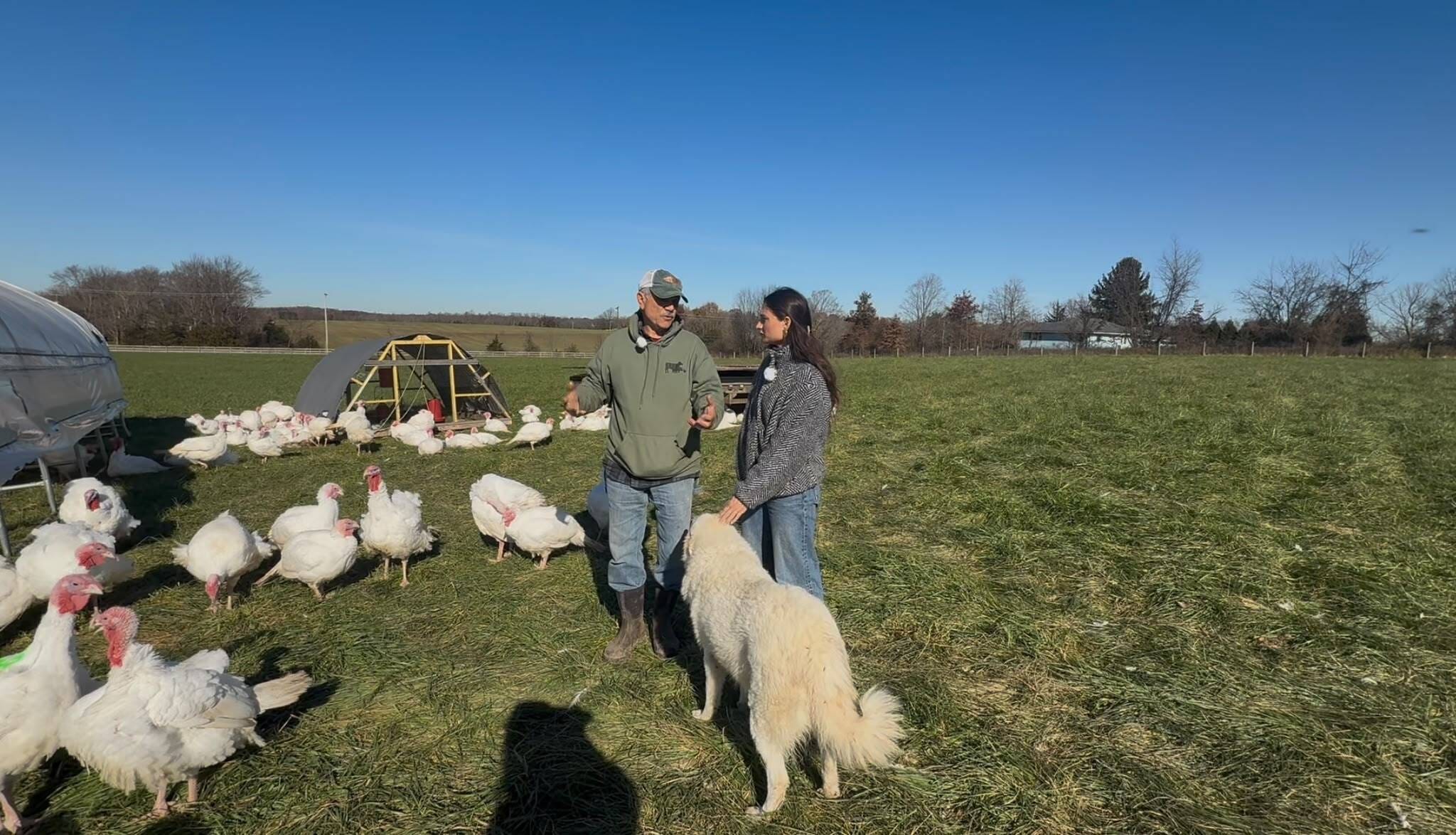
As we walked from the turkey coop to the cow pen to the slaughterhouse, we talked candidly about all of it, plus the issues making headlines: Roundup, raw milk, RFK Jr., and the challenges faced by small farmers.
Here’s an excerpt of our conversation.
The Philosophy Behind the Farm
John Lima: I’m really into the grass and soil. If I always have really good soil, good fertility, and good grasses, all my animals will do well, and they’ll taste better. And if they taste better, that means that I’m doing a good job. And it allows the whole environment to do better.
We are actively working now to add trees to our farm. It will help with fertility. It helps with the grazing of the cows. If you have good, fertile ground, everything else works. It feeds the wildlife as well as feeding the community. And if you feed the wildlife then the community gets better because you have a better ecosystem. That’s what it all boils down to.
Roundup and RFK Jr.
John: Roundup is so bad for you. It’s a chemical that kills certain types of broadleaf grasses or weeds. It kills everything. For example, if they’re growing soybeans, they spray Roundup in the field to kill all the weeds that are growing there. They have genetically modified the soybean plant to survive Roundup, so when more weeds start coming back up, they spray again to kill those weeds so they don’t compete with the growth of the soybean. The problem is that the Roundup just totally destroys all the organisms in the soil. So now you end up having a plant that is not being fed by the soil. You have to give it chemicals for it to grow.
So it doesn’t have the same type of growth as it would if you had a fertile soil. And there’s also a lot of research saying that Roundup is not good for your health. But yet we’re allowing farmers to do that in our country. And why do other countries, not all of them but a lot of them, ban Roundup?
I thought Robert Kennedy had some really good ideas. Honestly, I don’t think he is free to do what he wants as he would like to. I think he’s being held back. I can’t believe that he agreed to the Roundup thing. I could be wrong, but it sure seems like that’s not something he would do. I know so many professors at Rutgers who have done so much research on this. And they’re here at my farm all the time, and they just tell me how bad we’re finding out all of this is. But that’s what we’re doing.
Why He Doesn’t Raise Dairy Cows
Rafaela Siewert: Are you drinking raw milk?
John: No, because it’s illegal in New Jersey. Which is a whole other thing. There’s actually just a couple people in New Jersey who make those decisions and they feel that it’s not good for your health. If and when they retire there’s a good chance that that law may change. But I mean, right now they’re calling the shots and that’s what they want to do. It’s just so frustrating. We don’t have milking cows here. One of the reasons why we never thought about it is because I’m not interested in pasteurized milk, I’m just not interested in doing that. If it was raw milk, I would maybe have considered it. Why would I want to build a whole pasteurization plant? Or why do I want to have my cows here? And then somebody comes in and buys your milk, takes it to a pasteurization plant, and you bring it back? It just doesn’t seem like the right thing.
How Immigration Policy Impacts Small Farmers
John: So we only have citizens working here, American citizens or people who are here on the H-2A visa. That’s all that we do. My worry is that they should be improving the H-2A system. And I don’t think they are. They’re keeping it the way it is, which works. But I think it could be better.
Every year I have to reapply. So every year it costs me several thousand dollars to keep someone here. Even if they’re here for ten months and they have to go home for two, why do I have to reapply every year? Can’t I have maybe a two-year program or a three-year program where they’re able to come? They still have to go home, but they don’t have to reapply. It’s easily thousands of dollars. But it’s worth it to us because we get really good people to really help us with the farm.
Rafaela: How long have they been working here?
John: Some of them for ten years now.
Rafaela: Why do you think they’ve made it so hard?
John: I don’t know. It’s been like this forever. It could be improved to make it easier on the farmers and be less costly.
I wish they’d give us more leniency on different jobs that they could do. Especially for dairy farmers, they could use a lot more H-2A people, and they’re not making it as friendly for a lot of them. I’m hoping they’ll change it. Doesn’t really seem to matter who’s president or vice president or in the Congress. It just seems like they’re always disagreeing and nothing ever really seems to get improved. So we’ll see.
A Farmer Weighs In on Presidential Clemency
Rafaela: How do you feel about the turkey pardon at the White House?
John: I think it’s awesome!


