



Good morning, and welcome to The National Press.
Today in our daily show, we cover two local stories that could have major consequences beyond their home states.
In Michigan, reporter Jessica Harthorn examined six months of court records and found major differences in how judges decide whether defendants charged with serious crimes can leave jail before trial. Why are some judges granting cashless bonds far more often than others? And what does that mean for public safety?
Meanwhile, ABC7’s Lisa Fletcher takes us inside a Harvard laboratory where researchers are growing human cells on microchips to test new medicines. After nearly 80 years of relying on animal testing, could this technology offer a better way?
Throughout our network, we’re also looking at a new law bringing the Ten Commandments into Alabama classrooms and an AI-generated political attack ad in North Carolina that’s causing controversy just days before the midterms.
In Today’s Show

In Michigan, Does Your Freedom Depend on Which Judge You Get?
Imagine getting arrested for a serious crime, and whether you walk out of jail depends partly on which judge is sitting on the bench. That’s the question raised by an investigation in Kalamazoo, Michigan, where WWMT reporter Jessica Harthorn obtained six months of court records and uncovered major differences in how judges release defendants.
One judge granted cashless bonds in nearly 70% of felony arraignments examined, while another granted them in just 34%. Harthorn’s investigation also revisits the death of Kalamazoo County Sheriff’s Sgt. Ryan Proxmire, who was killed by a man previously released on cashless bonds twice. His family wants to know whether those decisions played a role in his death.

Could Human Organs on Microchips Replace Animal Testing?
For decades, nearly every new medicine in America had to clear the same hurdle before reaching patients: animal testing. However, more than 90% of drugs that pass animal studies still fail in human trials. Now, Washington is changing its approach, allowing drug developers to use emerging technologies that could provide better answers.
ABC7 investigative reporter Lisa Fletcher traveled to Harvard’s Wyss Institute, where researchers are developing tiny devices containing living human cells that mimic how organs function. In one study described by researchers, a liver-on-a-chip detected drug toxicity far better than traditional animal tests. Scientists believe these technologies could dramatically speed up drug development, lower costs, and lead to safer, more effective medicines.
The Headlines From Our Network
Our newsroom is plugged into a network of hundreds of local reporters around the country. Every day our team scans local news from across the country so you don’t have to.
These are the stories that caught our eye:

Alabama Will Require Ten Commandments Displays in Public Schools
Students in Alabama will soon see the Ten Commandments displayed alongside excerpts from America’s founding documents. Under a new state law, schools will be required to post the displays in common areas and fifth- through 12th-grade classrooms where U.S. history is taught, subject to donated materials and funding. The requirements are scheduled to begin in January 2027.
A North Carolina Drag Queen Says She Was Put in a Fake Political Ad
A political attack ad in North Carolina’s 11th Congressional District shows Democratic candidate Jamie Ager dancing with a drag queen in a barn. There’s just one problem: The scene was created using artificial intelligence.
The Asheville drag performer known as Nova says she’s never met Ager and that her image was used by the campaign without permission. Nova has issued a cease-and-desist demand, but the ad continues to circulate—raising important questions about AI-generated imagery in political campaigns.
Bail Reform Group Has Stopped Bonding Out Inmates in Bexar County After Freed Man Later Charged in Six-Person Killing Spree
In 2022, the Texas Organizing Project (TOP) bailed Shane James out of Bexar County jail following domestic assault charges. In the year after his release, James went on to kill six people in a shooting spree that spanned Austin and San Antonio.
An investigation by WOAI’s I-Team found that TOP had bailed out more than a thousand inmates from the jail, including repeat offenders with violent records, and that many failed to appear in court. Bexar County has confirmed TOP stopped bonding inmates as of April 2024, months after James’s arrest.
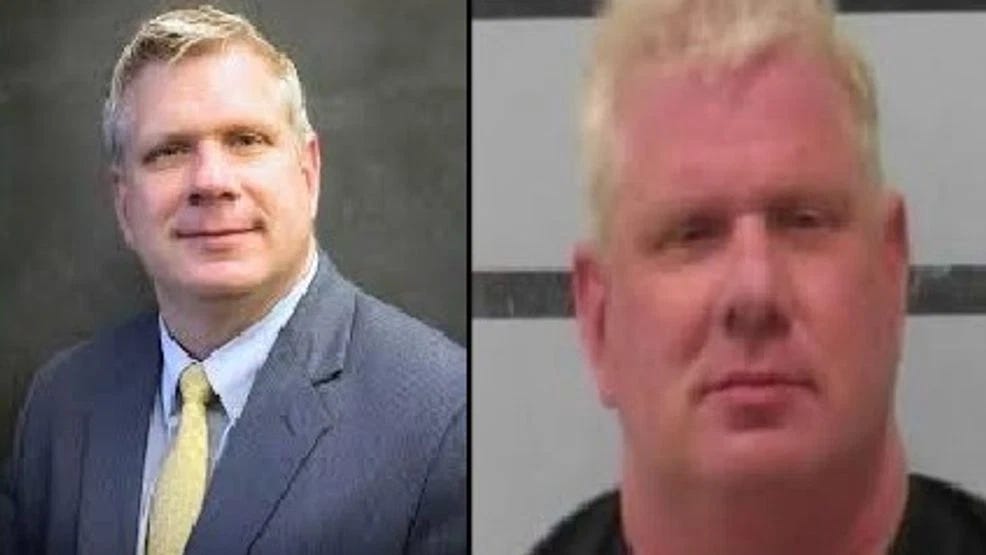
Texas Tech professor who branded fentanyl ‘pink flamingo’ and exploited women sentenced to 40 years
Daniel Taylor, 51, a former assistant professor of supply chain management at Texas Tech University, was sentenced Monday to 40 years in federal prison after pleading guilty to manufacturing and distributing fentanyl in the Lubbock area. Taylor produced two branded fentanyl products — a white powder called ‘ghost’ and a fentanyl-bromazolam mixture dyed pink and packaged with flamingo stickers, which he called ‘pink flamingo’ — and provided drugs to multiple women in exchange for sex, several of whom overdosed. Court documents also reveal Taylor is a previously convicted felon who was once court-martialed after attempting to fake his own death.
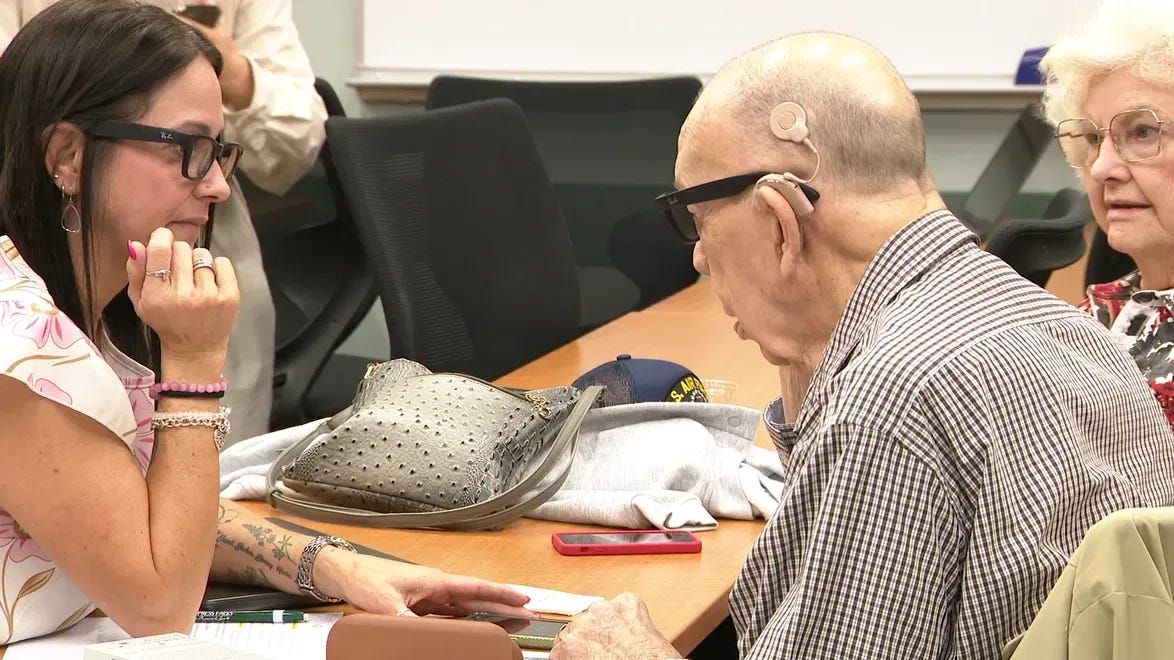
Meta donates 130,000 AI smart glasses to blind veterans
Meta has pledged 130,000 pairs of Ray-Ban Meta AI glasses to blind and visually impaired veterans nationwide, with an Austin-area distribution event organized by East Texas Lighthouse for the Blind and partners at UT Austin’s Dell Campus. The glasses pair a wearable camera with AI audio assistance, allowing users to navigate environments, read text, and identify objects hands-free. Veterans received individual setup appointments and ongoing training support rather than simply a device.
What else should we be covering?
The most important stories in America start in communities like yours.
Tell us what we’re missing in the comments, and share the local stories you think deserve national attention.
The National Press
Real reporting. From real America.