



Good morning, and welcome to The National Press.
It’s Election Eve, and tomorrow Americans will decide which party controls Congress.
Today we’re looking at a closely contested Senate race in Maine, where one of the country’s most resilient Republican incumbents is fighting to keep her seat. And later, a landmark settlement with Meta is raising questions about whether protecting children online could come at the expense of everyone’s privacy.
In Maine, Republican Susan Collins has held her Senate seat since 1997, building a reputation as one of the toughest incumbents in the country to beat. But this year, she’s facing a challenger Democrats never planned on. Former state Senate President Troy Jackson took over the nomination in July after Graham Platner dropped out of the race. Now polls show a tight contest, even as most Mainers say they still expect Collins to win. Can she defy expectations one more time?
Meanwhile, more than 50 attorneys general have come together in a settlement with Meta worth up to $17 billion. The company has promised new protections for kids and teens on Facebook and Instagram. But some privacy advocates say those protections could mean collecting even more personal information from young people, and from adults, too. Is that really making social media safer?
In Today’s Show

Susan Collins Has Defied the Polls Before. Can She Do It Again?
The road to the Senate majority may run through Maine. Republican Susan Collins has held her seat since 1997 and built a reputation as one of the toughest incumbents in the country to beat. But this year she’s facing former state Senate President Troy Jackson, a fifth-generation logger who became the Democratic nominee after primary winner Graham Platner dropped out amid sexual assault allegations he denies.
The final Marist poll has Jackson ahead by just two points, within the margin of error. And yet nearly six in 10 Mainers in that same poll say they expect Collins to win. CBS 13 anchor Gregg Lagerquist, who moderated the first Collins-Jackson debate, joins us to explain why the incumbent remains so difficult to beat. From her reputation as an independent Republican to her ability to bring federal funding back to Maine, Collins has spent decades building a political coalition that crosses party lines. But Lagerquist says this election feels different. With the economy weighing on voters and fewer undecided Mainers left to persuade, could this finally be the race she loses?

Meta Agreed to a $17 Billion Child Safety Settlement. Could It Make Things Worse?
These days, there isn’t much that every state can agree on. But recently, more than 50 attorneys general, Republican and Democrat, lined up against one company: Meta. Their accusation was that Facebook and Instagram were built to hook kids and teens, that Meta knew its apps could harm young people’s mental health, and that the company misled the public about how safe they were.
Now Meta has agreed to a settlement worth up to $17.1 billion, with new daily time limits, nighttime lockouts, parental controls and stronger age verification. But here’s the catch: To know who’s a teenager, Meta also needs to know who isn’t. That includes you. David Greene, senior counsel at the Electronic Frontier Foundation, argues that the deal could increase surveillance of young people while requiring adults to provide more information about themselves. He also questions whether giving parents more control necessarily makes every teenager safer. So does this settlement go far enough to protect kids, or could it create new problems for everyone?
The Headlines From Our Network
We are plugged into a network of hundreds of local reporters around the country. Every day our team scans local news from across the country so you don’t have to.
These are the stories that caught our eye:
Virginia Voters Will Decide Whether to Put Abortion Rights in the State Constitution
Tomorrow, Virginia voters decide whether to put abortion rights in the state’s constitution. Abortion is already legal in Virginia through the second trimester, but the amendment would write reproductive freedom into the constitution, making it harder for lawmakers to change those protections. It would also cover prenatal and postpartum care, birth control, miscarriage care and fertility services.
Supporters say the measure would protect reproductive health care from the political back-and-forth that followed the Supreme Court’s decision to overturn Roe v. Wade in 2022. Opponents say the amendment goes too far, and the Virginia Medical Freedom Alliance is among those challenging the ballot language in court. Supporters dispute claims that the measure would eliminate parental consent protections. And the legal fight could continue even after the votes are counted, with a hearing scheduled for November 13.
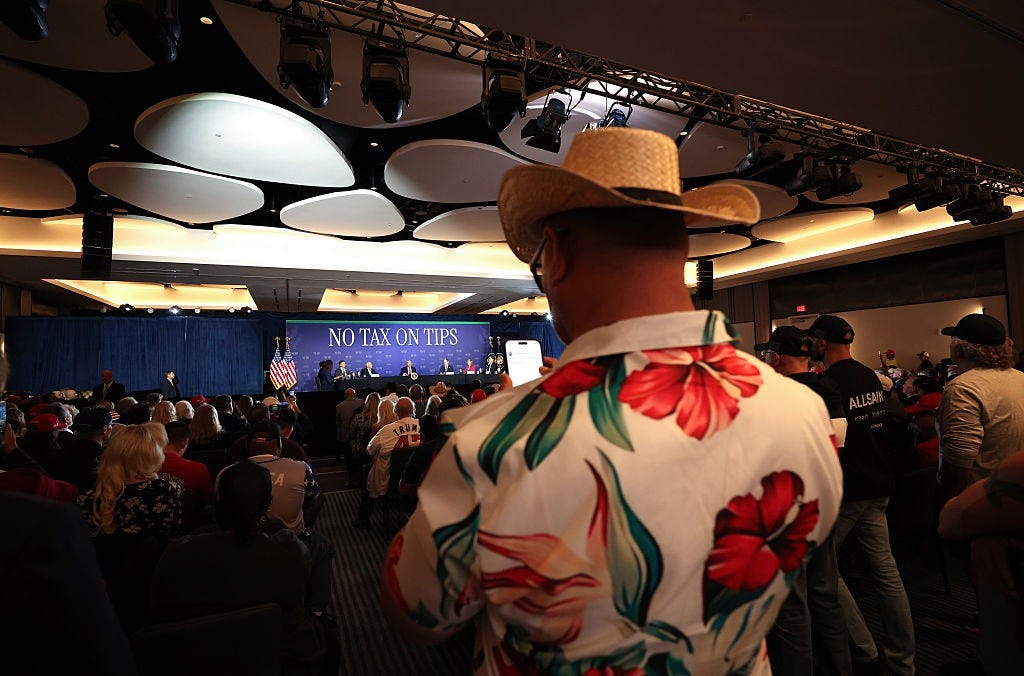
Las Vegas Workers Say Trump’s “No Tax on Tips” Promise Isn’t Quite What They Expected
“No tax on tips.” It’s a phrase you’ve probably heard President Trump repeat time and again. He made it a campaign promise in Nevada in 2024, and it eventually became law. Eligible workers can now deduct up to $25,000 in qualified tips from their federal taxable income each year.
But two years after the campaign promise, some Las Vegas workers say the savings aren’t as big as they hoped. That’s because it’s a deduction, not a refund, and workers still pay Social Security and Medicare taxes. Some employees don’t qualify at all. Jennifer Hanson, a banquet server at Red Rock, says her mandatory service charges count as wages rather than tips, leaving much of her income outside the benefit. Married couples who both earn tips also share the $25,000 limit. Now the Culinary Union is asking the IRS to make changes.

A Wisconsin Man Tried to Get Arrested for Tampering With a Ballot Box. It Worked.
Finally, one last election headline with a twist.
A man in Green Bay, Wisconsin, was charged after allegedly tampering with a ballot box outside City Hall. But according to police, he wasn’t trying to steal ballots or change votes. He said he wanted to get caught.
Authorities say 32-year-old Rolex Augustin removed a security seal from the ballot box in September and later told police he did it because he thought being arrested would lead to his deportation to Haiti. When Augustin failed to appear for a court hearing in October, police issued a warrant. But ICE had already deported him earlier that month, apparently without notifying local officials. The ballot box remained secured, and officials reported no compromised ballots.
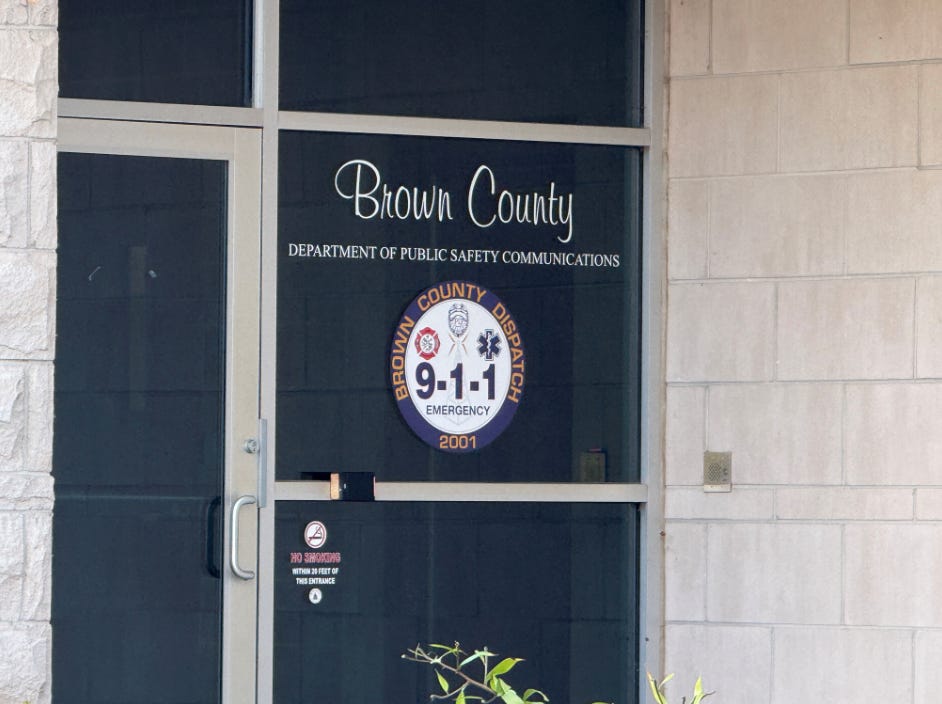
Brown County deploys AI to handle non-emergency 911 calls, freeing dispatchers for crises
Brown County, Wis., has launched an AI-powered virtual assistant called AVA to field its roughly 160,000 non-emergency calls a year to its 911 communications center. In its first full week, AVA handled more than 60% of non-emergency calls, accounting for 58 hours of dispatcher time. The system, 90% grant-funded at $110,000 annually, is already operating in three other Wisconsin counties, with more in testing.
What else should we be covering?
The most important stories in America start in communities like yours.
Tomorrow is Election Day. What races are you watching, and have you already cast your ballot? And do you think Meta is doing enough for child safety? What would you like to see social media platforms do to protect mental health?
Tell us what we’re missing in the comments, and share the local stories you think deserve national attention.
The National Press
Real reporting. From real America.