



Good morning, and welcome to The National Press.
Today is Veterans Day, a time when Americans pause to honor the men and women who have worn our nation’s uniform.
But here at The National Press, we want to do more than say thank you.
We want to talk about what happens after the uniform comes off.
And here’s a number that is truly heartbreaking.
According to the VA’s report cited on today’s show, about 18 veterans die by suicide every day, and more than 60% of them weren’t getting care from the VA.
That means help often has to come from somewhere else. From family, from neighbors, from communities that refuse to let veterans fight alone.
Today, Lyndsay Keith speaks with retired Army Maj. Gen. Bob Dees, who founded a community in Virginia where veterans facing trauma and tough transitions live together, work the land and heal.
We’re also looking at a veteran emergency alert system that never issued a single alert, a California nonprofit running out of money because so many veterans needed help, and a new study testing whether a drug best known for weight loss could help treat alcohol addiction.
In Today’s Show

Inside Valor Farm, Where Veterans Are Finding Hope After Military Service
Retired Army Maj. Gen. Bob Dees served 31 years in uniform, commanding thousands of soldiers and witnessing firsthand the sacrifices they and their families made.
In 2020, he founded the National Center for Healthy Veterans at Valor Farm in Altavista, Virginia.
It’s a place where veterans facing trauma and difficult transitions can live together, work the land and rebuild their lives.
And it’s not a short-term program.
Veterans spend nine months at Valor Farm, where they live in tiny homes, share meals and participate in trauma recovery, resilience training and career preparation.
The farm also has horses, a carpentry shop and agricultural programs that help veterans find purpose and self-esteem.
Dees says one of the biggest goals is defeating isolation.
He told Lyndsay about a veteran who arrived with severe PTSD and thoughts of suicide. After receiving additional help from the VA and completing the program, the man found a job and spoke at graduation.
“Thanks for giving me hope,” the veteran told the staff.
Dees recalled meeting a 13-year-old girl whose father was struggling with trauma.
When he asked why her family had come to Valor Farm, she said, “We just want our daddy back.”
After the family went through the program, he asked her how things were going.
“I’ve got my daddy back,” she told him.
And Dees says there’s something everyone can do to help veterans in their own communities.
Don’t just thank them for their service. Find ways to engage them.
Invite them into community groups, give them opportunities to lead and help them continue doing what so many of them joined the military to do: serve others.
You can learn more about the program at HealthyVeterans.org.
The Headlines From Our Network
Every day, our team scans local news from across the country so you don’t have to.
These are the stories that caught our eye, and why they matter beyond their ZIP code.

Texas Created an Emergency Alert for Veterans. Not One Was Ever Issued.
What good is an emergency alert if it never goes off?
In 2019, Texas created what’s called the CAMO Alert.
It was supposed to work like an AMBER Alert for veterans missing during a mental health crisis.
But News 4 San Antonio reports only 24 veterans ever enrolled, and not one alert was issued before the program expired in 2023.
Part of the issue? Veterans had to sign up before a crisis, with a witness.
State Rep. Josey Garcia, an Air Force veteran, says combat veterans won’t join a government registry.
“The state of Texas failed,” Garcia said.
She now plans to introduce legislation to revive the program and allow families to report veterans in crisis.
And Texas isn’t alone. Delaware and Wisconsin also have similar alerts, while other states have considered them.

California Veterans Program Runs Out of Money Because So Many People Needed Help
Sometimes a program runs out of money because it failed.
In Shasta County, California, it ran out because so many veterans showed up.
ABC7 reports the nonprofit Our Hero’s Dreams received $250,000 in opioid settlement money to help homeless veterans.
The funding was supposed to last a year.
It ran out in about five and a half months.
The organization’s CEO told county supervisors that more veterans needed help than projected.
Founder Justin Bond, a retired Army combat engineer, says he became addicted to painkillers after undergoing 58 surgeries following his service.
Bond and veterans in the program refer to prescription opioids as “VA candy.”
Now the nonprofit is asking for additional settlement funding to keep helping veterans.
One county supervisor says the money appears to have been spent wisely and wants to explore making more available.
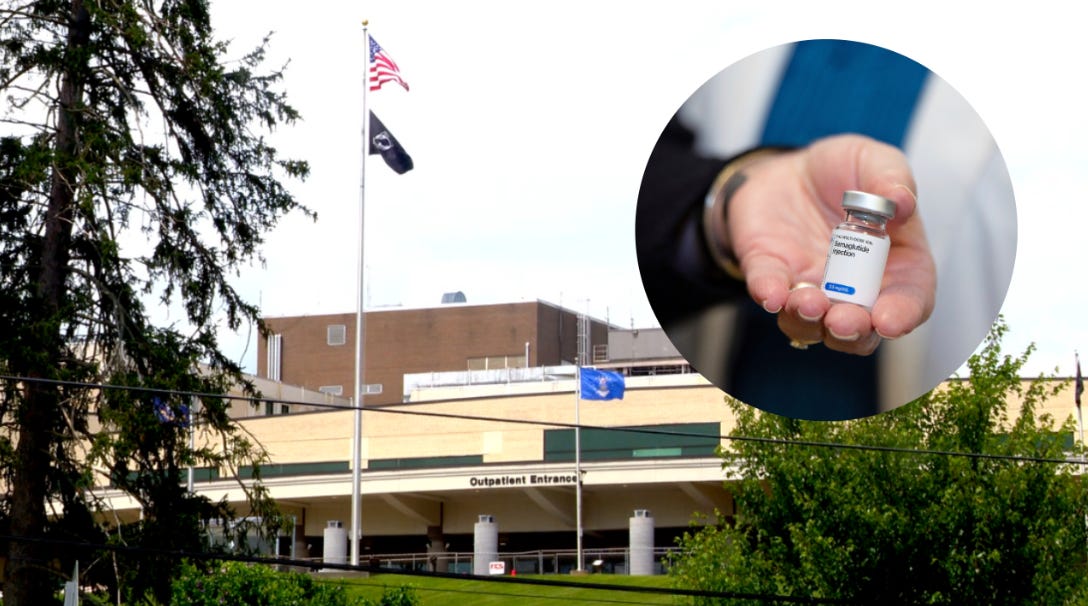
Could a Popular Weight-Loss Drug Help Veterans Struggling With Alcohol Addiction?
Addiction is also at the center of our last story, involving a drug you probably know for weight loss.
The Charles George VA Medical Center in Asheville, North Carolina, is testing whether semaglutide, a GLP-1 drug best known for diabetes and weight loss, can curb drinking.
ABC13 reports Asheville is one of 18 sites in a national trial seeking at least 600 veterans with alcohol use disorder.
Participants will receive a weekly shot or a placebo for about six months.
The overall trial will last about four years.
The lead investigator says more than 400,000 veterans have alcohol use disorder, and no new medication for it has been approved in more than 20 years.
It’s important to know the drug is not approved to treat alcohol use disorder, and the VA strongly discourages trying it for that purpose without a doctor.
But if the study is successful, it could eventually lead to an FDA-approved treatment for anyone, not just veterans.
What else should we be covering?
The most important stories in America start in communities like yours.
Now we want to hear from you.
What do you want to see happen to help veterans who are in crisis? Should the government do more, or should private support systems be the path of the future?
Tell us what we’re missing in the comments, and share the local stories you think deserve national attention.
And a special thank you to everyone who has served our country.
The National Press
Real reporting. From real America.